The American Philomela


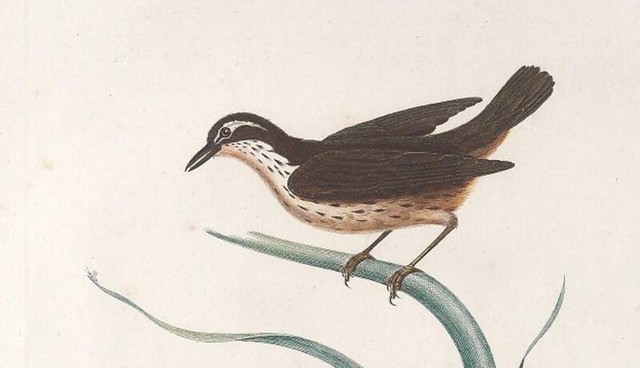
In 1831, Audubon lauded the vocal skills of a particular brown warbler.

Much and justly as the song of the Nightingale is admired, I am inclined, after having often listened to it, to pronounce it in no degree superior to that of the Louisiana Water Thrush.

Audubon’s comparison to the nightingale was taken up and elaborated just a few months later by his colleague and correspondent Thomas Nuttall.

The silence of night is also, at times, relieved by the incesssant warble of this Western Philomel, whose voice, breaking upon the ear of the lonely traveler in the wilderness, seems like the dulcet lay of some fairy vision…. distinguished by the loudness, sweetness, and expressive vivacity of their notes, which, like the nightingale’s, beginning high and clear, flow and descend in a cadence so delicate as to terminate in sounds scarcely audible above the whispering breeze.

This purple passage is only partly Nuttall’s, much of it adapted from Alexander Wilson’s 1811 account of the bird he described as The Water Thrush.

Fascinating as it may be to unravel the clew of intertextuality in early American ornithology, what interests me is whether it is possible to determine which waterthrush each of these authors was listening to. All three recognized only one species (Audubon would later recant his “split” of the Louisiana from the northern waterthrush), but that, of course, does not mean that they were not hearing both.

It is immediately apparent that Wilson had experience with both of the waterthrush species recognized today. In spring 1810, “among the mountain streams in the state of Tennessee,” he found

a variety of this bird pretty numerous, with legs of a bright yellow color.

He also records an “abundance” of them “in the cane-breaks, swamps, river-shores, and deep watery solitudes of Louisiana … and the Mississippi territory,” all localities and habitats suited only to the Louisiana waterthrush.

But it is equally clear that he had experience of the northern waterthrush.

About the beginning of May it passes through Pennsylvania to the north; it is seen along the channels of our solitary streams for ten or twelve days; afterwards disappears until August.

Wilson gives no indication, though, that he ever heard any of these passage northerns utter anything other than a sharp chip. His description of a male waterthrush’s singing post is obviously that of the Louisiana, “perched on the middle branches of a tree over the brook or river bank.”

What about the nature of the song itself? Wilson, and after him Nuttall, describes it as at first “very high and clear, falling with an almost imperceptible gradation till [the individual notes] are scarcely articulated.” I can almost stretch this to apply to the song of the Louisiana waterthrush, but Wilson goes on to praise

his charming melody, that can be heard for nearly half a mile … so exquisitely sweet and expressive,

a poor fit for either waterthrush and nearly nonsensical in description of the Louisiana’s piercing whistles and quiet stutterings.

More puzzling still is the comparison with the nightingale. It is impossible, publication dates notwithstanding, to know whether it was Nuttall or Audubon who came up with it, but the analogy rings not particularly true — especially with the added detail that the bird sings at night. Unlike the Ovenbird, neither of our waterthrushes is especially given to nocturnal vocalizing, though both species are known to have a crepuscular flight song.

Audubon certainly knew the song of the nightingale well, and Nuttall, though he was a Yorkshire boy, surely had occasion to hear it in southern England a time or two. (Wilson, alas, most likely knew the species only from poetry.)

It is hard for me to imagine that anyone who had ever listened to the slow, low-pitched, neatly separated phrases of a nightingale could be reminded of either of our waterthrush species. Slow a northern’s song down, with some pauses insert for breath, and I could almost be convinced that there is a similarity with the Old World singer, but only almost.

I think instead that the description of the waterthrush’s (or the waterthrushes’) song in all three of our authors is a composite, made up of bits of the northern song, bigger bits of the Louisania song (avant la lettre!), and lots of the song of one of the notorious night singers — a mockingbird or a yellow-breasted chat, both of which sing their slow, low-pitched and evenly spaced phrases from southern thickets day and night.

It’s no wonder it took us so long to figure the waterthrushes out.


Share

How Many Waterthrushes?

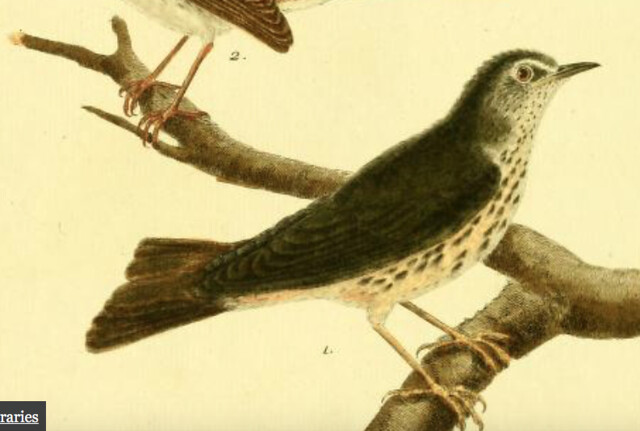
Pl enl 752 labeled tachetéeYesterday I set out, naively, to write the history of waterthrush identification in a paragraph or two. The matter turns out to be even more complicated than one would expect for a pair of little brown birds whose type specimens are not preserved and whose nomenclatural past is a snarled steaming mess.

Sometimes giving up is indeed the better part of valor. But I did learn a few things along the way — among them, just how hard it was to even figure out how many waterthrushes there are.

I’d assumed that European science knew only one before 1807, when Vieillot formally described the Louisiana waterthrush (from specimens taken in Kentucky!). In fact, though, it is evident that even those natural historians who recognized only one waterthrush species actually had access to specimens of both.

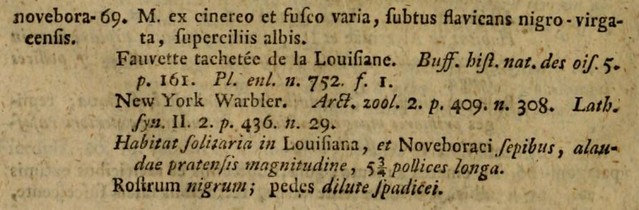
Consider this account of the northern waterthrush from the Histoire naturelle of the count de Buffon and his collaborators, which concludes with the description of

another warbler, also sent to us from Louisiana, whose plumage is a cleaner gray and shows only sparse streaking; the underparts are whitish, with a hint of buff on the flanks ….

This can only be the bird we know today as the Louisiana waterthrush — except for Buffon’s puzzling assertion that this second bird’s bill is smaller than that of the northern. I suspect that this is a slip of the pen, and that “le premier” should actually read here “le second” and vice versa.

In any event, John Latham and Thomas Pennant both followed the Frenchman’s lead in recognizing two species of waterthrush. Latham called the second the “umbrose warbler,” Pennant — even less felicitously — the “dusky warbler.”

It took the genius and industry of Louis Pierre Vieillot to straighten things out, aligning plumage and bill size in the way we do today. Unfortunately, and incomprehensibly, his description of the bird now known as the Louisiana waterthrush was unknown to Wilson, to Nuttall, and to Audubon.

Audubon would go so far as to declare himself the discoverer of the Louisiana waterthrush, describing it as a new species (and, naturally, “extremely delicate eating”) in 1841, only to explicitly recant eight years later:

although I was for many years convinced that two distinct species have been confounded under the name of Water Thrush, yet a more strict examination of individuals of these supposed species has induced me to … consider [them] as belonging to one and the same species.

Not until 1858 was the Louisiana waterthrush authoritatively resurrected, and even then it would be some decades before the birds and their scientific names were correctly matched up — but that’s another fragment of the story.

Share

Waterthrushes and Gummy Bears

vieill type of Louisiana waterthrusy

Waterthrush identification and misidentification can lay bare some strong emotions. In a recent online discussion of the value of the color of the supercilium, one of North America’s best birders was moved to this outburst:

the first individual to propose [that character as a useful distinction] should be covered in honey and gummy bears and thrown to a ravaging class of preschoolers to receive their just deserts.

As soon as I’d stopped laughing out loud, I silently congratulated Cameron for knowing the phrase “just deserts” (and spelling it right!), and then, inevitably, started to wonder: just who might that sticky-fated “first individual” have been?

Pl enl 752 labeled tachetée

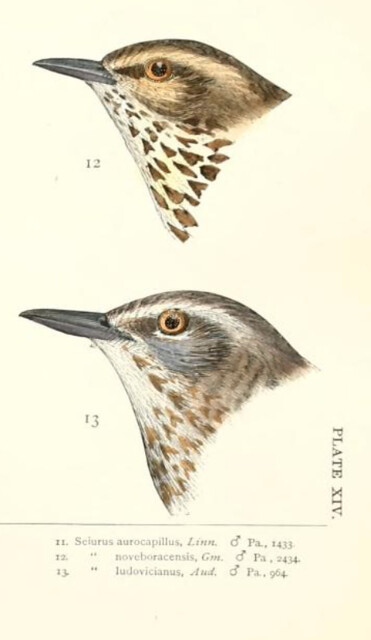
This particular ID chestnut turns out to be older than I’d expected. I knew that Roger Tory Peterson had used the color of the supercilium to distinguish the two species as early as the first Field Guide of 1934, and it was an easy matter to confirm that in this he was following the great Ralph Hoffman, who had written a quarter of a century before — in italics — that the Louisiana was to “be distinguished by the pure white line over the eye,” the same part of the bird “buffy in a strong light” in the northern waterthrush.

We have to go back another sixty years beyond that, though, to find what I believe is the first authoritative statement of the importance of supercilium color in identifying the waterthrushes. In 1858, Spencer Baird and his colleagues at the Smithsonian informed their readers that the Louisiana waterthrush was “readily distinguished” from its more widespread congener by its large bill and by the fact that

the stripe over the eye, besides being more conspicuous, is, with the underparts, of a decided white, instead of brownish yellow,

as in the northern. Baird, Brewer, and Ridgway would reaffirm this “field mark” in their influential History of North American Birds, published in 1874, this time reinforcing its validity in the accompanying color plate.

Ridgway 1874 waterthrushes

Before 1858, every published source seems to have relied on bill and tarsus measurements to distinguish the two species. And so the famous trio — the Nestor of American ornithology, the father of American oology, and the great cataloguer of American birds — appears to be responsible for promulgating the notion that the color of the eye stripe is sufficient to separate the brown-crowned members of the genus Parkesia. 

There we have it. Break out the honey, prepare the gummy bears, rally the preschoolers!

More about the tangled history of these species to come — 

Screen Shot 2018-06-07 at 2.11.23 PM

Share

Quality, Quantity, and the Junco


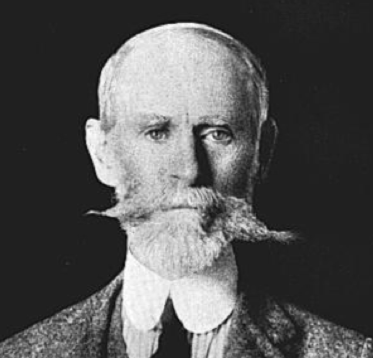
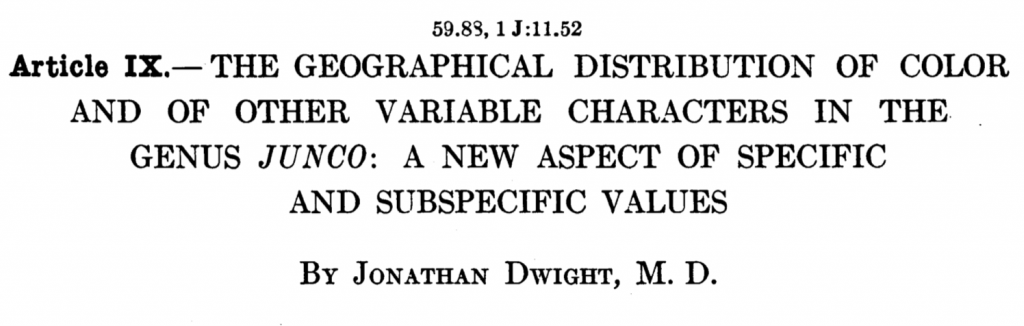
One hundred years ago today, the American Museum of Natural History published Jonathan Dwight‘s Geographic Distribution of Color and of Other Variable Characteristics in the Genus Juncopraised by Witmer Stone as “a philosophical discussion of a high order.” The philosophical part is announced in Dwight’s subtitle, A New Aspect of Specific and Subspecific Values.

Dwight’s approach in sorting out the juncos was a thoroughly artificial one, consisting largely in the creation of a nine-dimensional matrix,

first determining their most essential characters by analysis, then tracing the geographical distribution of these characters, and, finally, grouping the birds synthetically according to similarities rather than diferences.

Dwight determines “essentialness” on the basis of whether a given character is “quantitative” or “qualitative,” differences of the former sort marking subspecies, of the latter sort species. “Quality not quantity was his motto,” reported J.H. Fleming.

It is a neat system, resulting in the labeling of nineteen different junco kinds, but manifestly suspect in the weaselly nature of its terms. Ultimately, the only qualitative character — that is to say, the only feature distinguishing species — that Dwight recognizes in the juncos is color.

How quaint, we think, with a century of hindsight. But towards the end of his analysis, Dwight — who died 92 years ago — points to the future with startling clarity:

Zoologists and botanists, by actual experiment, have of late years so revolutionized ideas regarding species and hybrids that systematic ornithologists are likely to be looked upon as backward and unscientific unless they learn more of fluctuations and mutations, of manifestations of Mendelian and other laws, and all the modern theory that goes with them…. The accumulated facts and theories of the present day will be cleverly fitted together in a new era of synthetical ornithology and converted by experiment into a substantial and enduring edifice well worthy of the labor expended.

And what better to expend that labor on than juncos?


Share

Red Warblers and White-eared Titmice

I don’t care that it looks like the cloud of suspicion hanging over that Arizona red warbler is about to break out into a downpour of doubt. I’m still enormously jealous; whether it turns out that the tropical beauty flew from southern Mexico or it crossed the border in the backseat of an Altima, I will forever regret not having seen that flash of red in the ponderosa pines of Rose Canyon.

If the bird is eventually adjudged a plausibly “natural” vagrant, it will represent the first generally accepted record of the species north of Mexico — a very carefully qualified formulation that reminds us that the red warbler had a firm place on official lists of the birds of the United States for nearly sixty years before it was definitively removed in 1910.

Like so many Mexican birds, the red warbler was introduced to western science by the William Bullocks, father and son, as part of their London exhibitions of zoological and anthropological curiosities. Wildly successful for a while, the show eventually, inevitably, lost its appeal, and Bullock, Sr., sold the collection in a famous series of auctions.

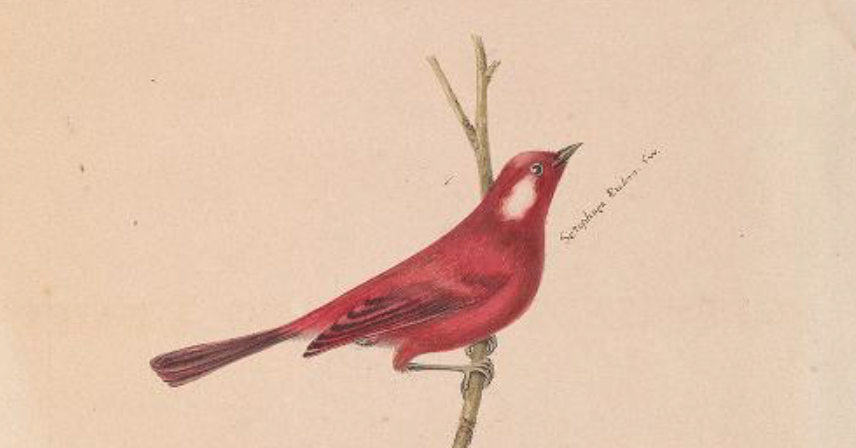
Before the birds went on the block, however, he made at least some of the specimens available to William Swainson, who formally described and named the new ones in the Philosophical Magazine for 1827. Swainson gave Setophaga rubra a clear and straightforward diagnosis: the new Mexican warbler, collected in Michoacán, was “entirely red,” its “ear feathers of a silky whiteness.” No mistaking this for any other bird.

That original description was translated into German in the Isisand Swainson himself repeated it in his 1838 Animals in Menageries, this time based on a specimen in his own collection from Toluca.

colored plate of the bird, based on an uncharacteristically clunky painting by Jean-Gabriel Prêtre, was published in 1836, accompanying Frédéric de Lafresnaye’s description of what he thought was a new species, the vermilion warbler, brought back from Xalapa by “Mme Salé” (presumably Cathérine Caillard Sallé, mother of the natural historian Auguste Sallé).  Charles Bonaparte corrected Lafresnaye’s error a year later, pointing out that the Xalapa bird was in fact identical to Swainson’s — but committing a lapse of his own in including Guatemala in the species’ range.

And it wasn’t over yet. More than a decade after William Swainson brought the red warbler to the notice of the scientific world, the New York collector Jacob P. Giraud received a shipment of bird skins from Texas, fully sixteen of which represented what Giraud thought were new species. Among them were a striking little creature that Giraud named the white-cheeked titmouse, Parus leucotis. The accompanying plate (at the top of this blog ‘post’) was by A. Halsey, an illustrator far less famous than the engraver, Nathaniel Currier.

The mistaken identity was quickly rectified. A few scant months after Giraud’s publication, George Clinton Leib noted, clearly and convincingly, that he had determined

Parus leucotis of Giraud to be identical with the Setophaga rubra of Swainson,

an observation affirmed “without doubt” by Philip Lutley Sclater a dozen years later.

The truly spectacular aspect of Giraud’s specimen, though, was not the bird’s identity but its origin. Giraud did not secure his type himself, but is quite clear that he acquired it from someone else, most likely his usual New York dealer, John Graham Bell, who was also the collector’s taxidermist of choice.

Giraud took Bell at his word as to the provenance of the Texas shipment, thus inspiring a poorly documented but nevertheless obviously vehement argument about those sixteen “new species” that would go on for a full forty years after Giraud’s death in July 1870.

Spencer Fullerton Baird, the most influential American natural historian of his day, listed the Texas red warbler specimens — Baird, too, owned one, also purchased from Bell — without comment in the list of United States birds he published in 1852. Just six years later, though, Baird bethought himself:

The propriety of introducing this species into the fauna of the United States is questionable. No specimens have as yet been found even as far north as northern Tamaulipas, in Mexico. As one of the birds described in Mr. Giraud’s work, however, it is entitled to a notice.

Baird made it clear just how much “notice” he thought it deserved by changing the locality of the skin in his own possession, USNM no. 561, from Texas to “Northern Mexico,” which he further altered in 1865 to “northeastern Mexico.” The Smithsonian now lists the location where the bird was collected simply as “unknown.”

Others had greater confidence in Bell and Giraud’s assignment of the red warbler to Texas. John Cassin in Philadelphia regretted that “no one of the several American naturalists who have visited Texas” since 1841 had seen the bird, but had no doubt that the Giraud specimen had come from there. Robert Ridgway, Baird’s protégé and eventual successor in the Smithsonian’s bird room, listed the species without comment in his 1881 Nomenclature, though six years later, in the Manual, he queried its assignment to southern Texas. In 1882, Elliott Coues denied the species a place in the main body of his Check List, but in the introduction expressed his belief that it had “doubtless” occurred north of the Rio Grande and could be expected to do so again — a notably more positive assessment than he had given the Giraud record in 1878.

Perhaps the most remarkable document to have come down to us in the matter is a paper published in the Ornithologist and Oologist for 1885 by Wells Cooke, in which Cooke argues vigorously for Giraud’s bona fides.

Considerable doubt has been expressed by ornithologists … but the recent great extension of our knowledge of the avifauna of the Southwestern United States is tending to inspire confidence in Giraud’s record.

Of the sixteen novelties Giraud described in 1841, Cooke reports that nine had meanwhile been encountered again in the United States, some of them turning out to be virtually common. Cooke finds the strongest support for Giraud’s credibility in a horned lark specimen acquired from Bell with the others; that bird, he says,

Mr. Henshaw has at last determined … is a tenable variety found only in Texas. Here we have a very strong argument in favor of Giraud’s good faith.

If he had still been walking this earth, Giraud would have been grateful. He himself “stoutly maintained to the day of his death that they [the specimens he had from Bell, including the red warbler] were taken from Texas.”

The moment of truth came with the publication of the American Ornithologists’ Union’s Check-List in 1886. This first edition comprised not only the species list but also the AOU’s Code of Nomenclature, a long and legalistic summary of the principles governing the naming of birds in that pre-ICZN day. Appropriately, most of those principles are very general in their formulation, taking in as many cases with as much flexibility as possible. It is jarring, then, to come across this decree, directed with painful specificity to a small set of records published by one man 45 years before:

That Giraud’s at present unconfirmed species of Texan birds be included in the List on Giraud’s authority.

This, of course, included the red warbler, assigned AOU number 691 and its habitat given as Mexico and Texas. The committee responsible for the second edition of the Check-list, published in 1895, expressly reasserted the appropriateness of including Giraud’s Texas species, and our warbler is right there in the same place it had occupied a decade earlier.

By 1908, however, as the AOU was preparing to issue the Check-list in a third edition, minds had been changed. In that year’s Supplement, the committee announced unequivocally and with a pair of gratuitous quotation marks that no. 691, the red warbler, was

to be expunged from the List, as based exclusively upon Giraud’s unconfirmed “Texas” records.

When the 1910 Check-list appeared, the introduction’s list of “the principal changes in the production of the new edition” was headed by “the elimination of all species included in former editions exclusively on the authority of Giraud as found in ‘Texas’.”

The AOU’s striking of the red warbler was greeted with general relief. Writing two years after the publication of the third edition of the Check-list, John Kern Strecker noted with snide satisfaction the discrediting of “Giraud’s ‘Texas’ species which should have long ago been excluded from the A.O.U. Check-list,” among them the red warbler. More recent works on the birds of Texas are unanimous in rejecting the species as a genuine member of the state’s wild avifauna: Oberholser calls its occurrence north of the Rio Grande “exceedingly questionable,” and neither edition of the T.O.S. Handbook so much as mentions the bird.

The red warbler is gone, off the table, vanished from Texas birding. But the indisputed occurrence — whatever its circumstances — of the bird in Arizona last week reminds us that it once loomed more prominent on the horizon of American ornithology’s expectations. Who knows? It might someday again.


Share