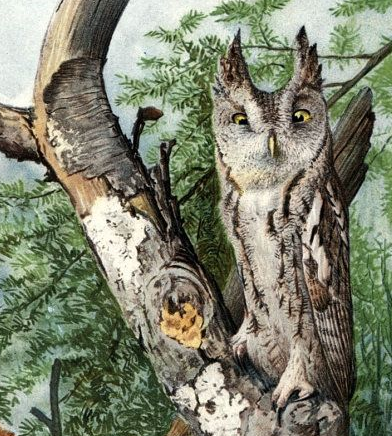
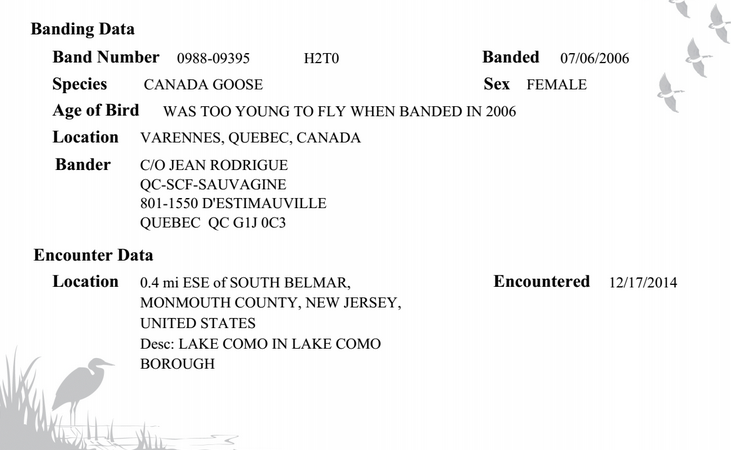
Birds or Words

Over at the ABA blog, where it is suggested that I am one of those birders

least concerned with what you call a bird. They are the ones who are distressed that a chicken hawk was chasing the snowbirds from their feeder.

Good stuff. What’s your take on what is intended as a serious argument?

And by the way, what do you think of the two images I selected as illustrations?

Share

Calendar Bird: January 2015

Valerie and David sent me a beautiful Italian calendar for Christmas this year, with large-format, fine-quality reproductions of colored plates from eighteenth- and nineteenth-century bird books.

Not a single one of them identified.

Frustrating? Not in the least. It’s a monthly opportunity to hone our bibliographic detective skills, and learn a bit about bird identification and the history of bird identification at the same time. Absolutely up my alley.
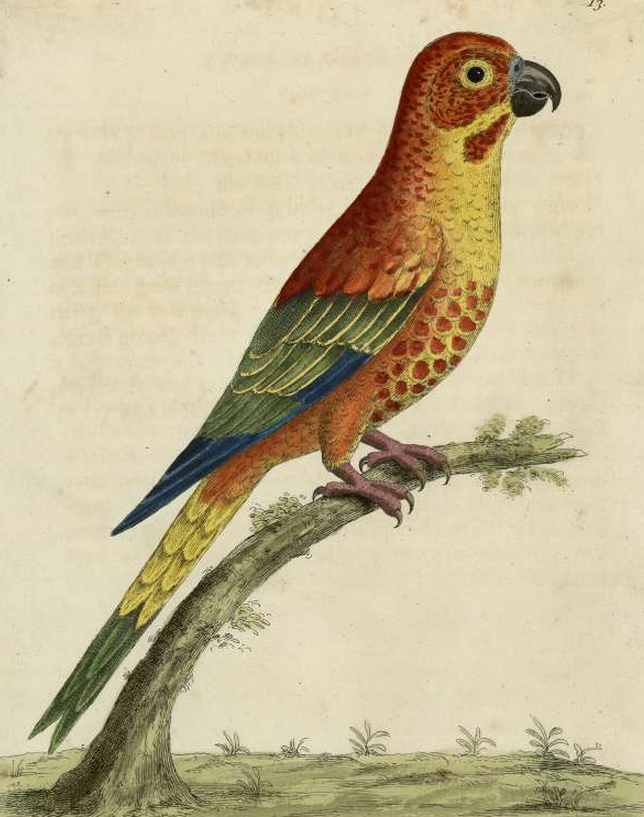
Albin, Aratinga solstitialis

This first image is easily recognized as the work of Eleazar Albin, the Anglo-German painter whose style is as distinctive as his failure to identify his birds. “Failure” is the wrong word: working in the 1730s, often from specimens — living or dead — of uncertain provenance and marked tattiness, Albin simply came too early to take advantage of any of the nomenclatural and identification tools available to the generations that would follow him.

Thus, the label on this plate, reproduced from a painting completed on July 30, 1735, was about as good as Albin or anyone could have done:

A Parroqueet from Angola.

It was a matter of seconds to identify the plate as Number 13 in the third volume of Albin’s Natural History of the Birds — though I haven’t yet figured out which of the several editions, authorized and pirated, was reproduced for the calendar.

But what is this colorful bird?

“Angola,” of course, is a red herring. Though Albin’s model

was brought from Angola, on the Coast of Guinea, and was in the Possession of a Gentleman near the Custom-House, who was pleased to let me draw its Picture,

there is no reason for us to then assume, as Albin did, that this was an African native at all. Indeed, there is no Old World parrot that looks remotely like this one.

Instead, it pays to remember that Angola was in the possession of Portugal in the mid-eighteenth century (and for a long, long time thereafter). Albin’s acquaintance probably did bring the bird to London from Angola — but Angola was no doubt just one stage in its journey to England from, say, the Portugese holdings in South America.

Aha. It all falls into place. This may not be the most accurate of images, but once we turn our attention to the Neotropics, it is readily identifiable as the portrait of a sun parakeet.

Indeed, Albin’s plate (which Brisson would later sniff was “mal coloriée“) served Linnaeus as the “type” of the species he named Psittacus solstitialis,

a long-tailed yellow parrot with green wing coverts and a forked tail.

The Linnaean type locality came from Albin, too: “Habitat in Guinea,” a designation not definitively corrected until 1906 (!), when Hellmayr substituted “Cayenne.”

What will February bring?



Share

Strange Birdfellows

DSC00751

Alison had spent something like sixteen hours getting home from Canada the day before, but she was as chipper as could be expected when 4:00 came Sunday morning. The three of us piled into the car and headed south, meeting up with Frank pre-dawn for our first Barnegat Light Christmas Count.

Gellert couldn’t have been happier when he heard our assignment: to walk the beach south and the duneside back. Oh boy, Papa, a long stroll and saltwater, too!

DSC00754

I know few places where the sky and the sea are as consistently beautiful as New Jersey’s barrier islands. It was warm, the sand was well packed, and there were plenty of birds to be seen; the featherless bipeds had nearly as much fun as the dog. A nice flock of northern gannets fed its way south early in the morning, and that other black and white specialty of the outer beaches, snow buntings, flicked and flittered above our heads and in the wrack. I’d warned Alison not to expect any shorebirds — our “territory” was south of the rock jetties where they all hang out — but I had to eat my words when we found some 300 dunlin working the beach; with them were black-bellied plovers, sanderlings, ruddy turnstones, and a small handful of purple sandpipers, that last a bird I don’t often run into on the open sand.

The morning’s big surprise came an hour and a quarter into our walk. As we admired the long-tailed ducks’ speedy flight and laughed at their bumbling landings, I did a double-take when a tiny black and white football buzzed down the surf: a dovekie! Neither of us had ever seen one from shore, or even in sight of shore, in New Jersey, and I told Alison, more than half serious, that I wasn’t looking forward to reporting something so unusual at the midday tally.

But we announced it anyway. The responses were not what we’d expected: “We had one, too.” “Us, too.” “We saw two.” Some inscrutable alchemy of wind and wave had driven dovekies onshore, to everyone’s surprise and delight. And best of all, it wasn’t a “wreck” by any means; all the birds seen were happy and alive, whirring up and down the beaches and no doubt exchanging expressions of their own startlement: “Why, I don’t think I’ve ever seen a human before!”

That little alcid was far and away the highlight of my CBC season this year. But it got better.

After the noontime conviviality, Alison and I did a bit of poaching, walking out Barnegat Inlet for a closer look at the common eiders and harlequin ducks riding what was by then a considerable swell. Just as we turned around, as nearly sated on sea ducks as one can be, another little black and white bird flew close overhead. This one was a swallow, a fine tree swallow, and in company with four more. Even as far north as Ocean County, that hardy frugivore is not entirely a surprise in late December, but the tree swallows’ presence was still exciting — and it created a combination I had never witnessed:

Tree swallows and a dovekie on the same day from the same beach. Not a bad way to end the birding year.

Share

Cold Owls

Fuertes eastern screech-owl

It’s a mild Christmas weekend here in north Jersey, but it isn’t always that way. On December 28, 1922, our area was hit by a severe ice storm, coating “every tree, wire and shrub.” The next morning, Louis S. Kohler checked on his local eastern screech-owl: the entrance to its roost hole in a dead chestnut was

sealed over with a sheet of ice about an inch thick…. sure enough the owl was within, but so nearly dead from want of fresh air that I carried him into the house to warm him.

Unfortunately, the bird did not survive. Kohler had it mounted:

It is sad indeed to lose his services as a mouse-trap, but I am compensated by having him with me for all time in the cabinet.

Let’s hope the rest of this winter is easier on our little neighborhood owls.

Share

Canadian Canadas

DSC00669

White on orange? Must be another of those Québecois geese.

And so it is:

Screenshot 2014-12-25 13.12.03

By the way, for those interested in such things, that median throat stripe (I’m hearing it called a gular stripe recently) is very nearly complete, isn’t it?

Share