Casualties of War

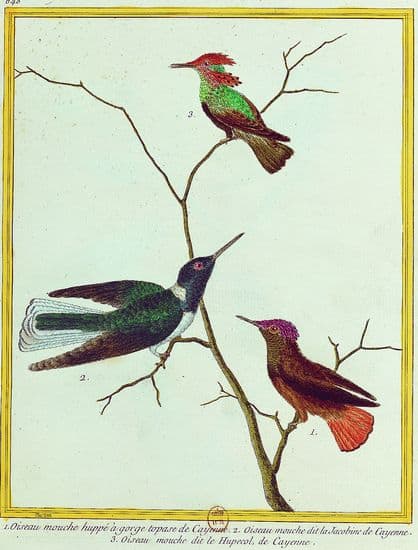
Auguste Ménégaux, who died on this date 78 years ago, was in Le Havre when war broke out in 1914.

A magnificent collection of living hummingbirds from South America, in very good health, arrived at the very moment that war was declared. The poor birds were neglected, and they all died on board the boat before reaching Paris, to the great dismay of their owner and collectors.

The business suffered setbacks in London, too, where

many collectors have been able to sell or trade their objects only at very low prices.

And who knows, Ménégaux asks ominously, what may have happened to the trade in live birds and specimens in Wallonia and Belgian Luxembourg.

We tend to think of the end of consumptive natural history hobbies as the result of a new ethic, the cultural abandonment of practices finally recognized as barbarous. But in fact there were other causes, not the least of them the First World War and the attendant breakdown of the international networks of collectors.

Share

A First

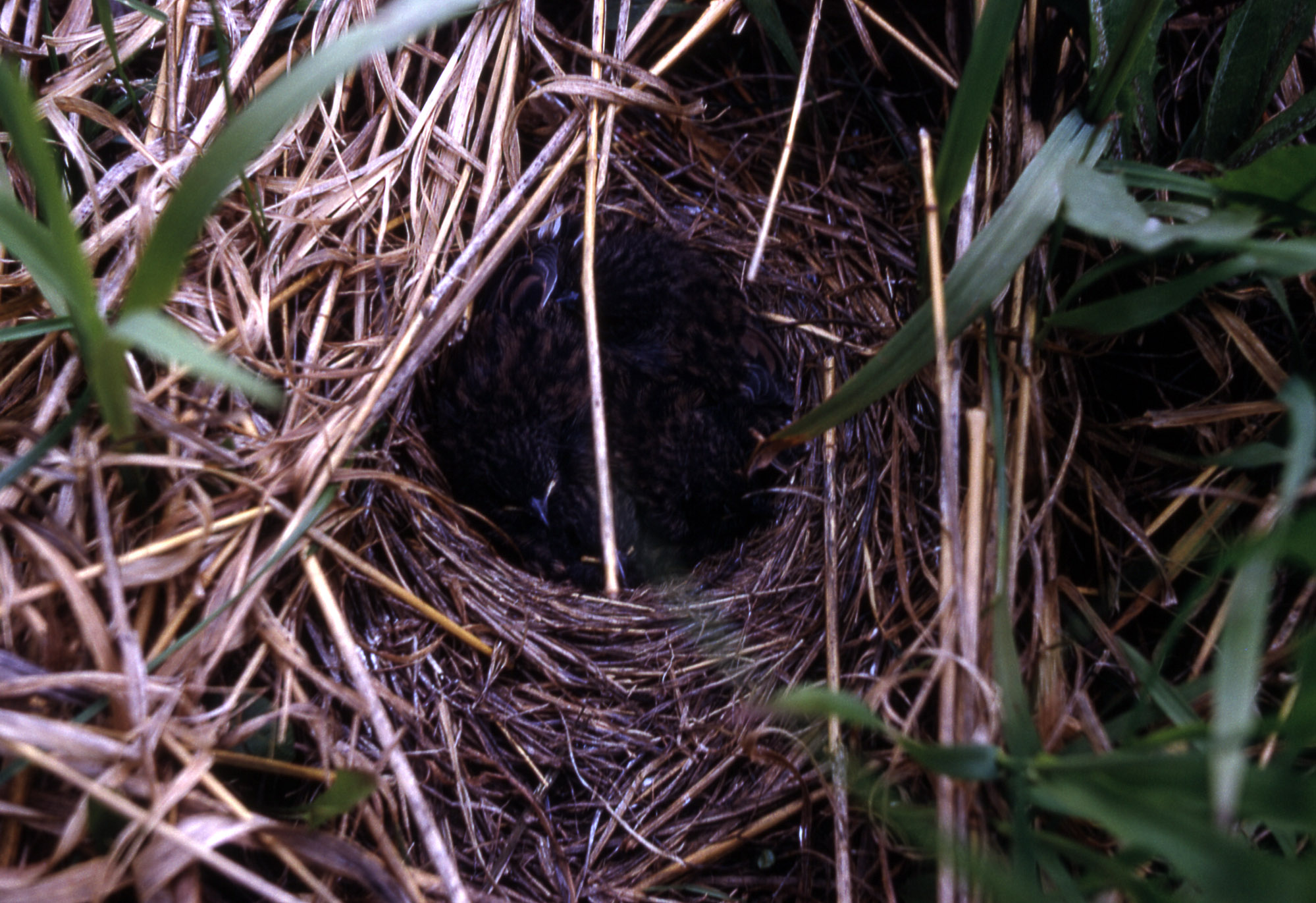
Dark-eyed Junco nest and young. Natl Park Service

Want to know what the nest and eggs of a North American breeding bird look like? Just google it. Full descriptions for almost every single species are at your keyboarding fingertips, and though I haven’t checked, I’m betting that there are photos of each one, too.

But bird-nesting is like everything else: Somebody had to be the first to find one. And our North American avifauna included some tough customers. The Harris sparrow, the Ross goose, and the bristle-thighed curlewall high-latitude breeders, led researchers a merry chase for long decades before they gave up their secrets.

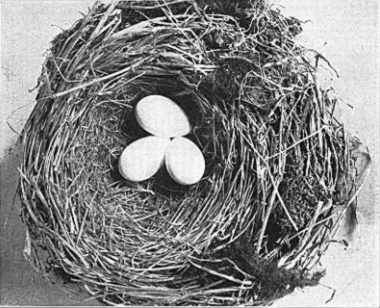
One hundred years ago today, and much closer to home for most of us, another long-sought nest was finally discovered. On July 11, 1915, Frederick C. Lincoln, Harold R. Durand, and A.H. Burns were able to “place on record … the first nest and eggs of the brown-capped rosy finch (Leucosticte australis) known to science.”

Screenshot 2015-07-04 11.37.53


Even if Colorado’s Mt. Bross wasn’t the Arctic, the nest-seekers faced some challenges. At 13,500 feet,

the nest was found [on] a short cliff about forty feet in height, of Lincoln porphyry, protruding through the upper edge of the schists and shales which occur just below the granite cap. The face of this cliff had suffered considerably from erosion, resulting in “chimneys” and cavities from a few inches to several feet in diameter….

Screenshot 2015-07-04 11.50.21

Fortunately, the female of the pair was “extremely solicitous,” and once flushed, she went back again and again to her eggs, leading the explorers to the precious nest.

Both male and female were secured.


Share

Poor Pompadour, 2

But at least she has those two beautiful birds named in her honor, right?

Well, not exactly.

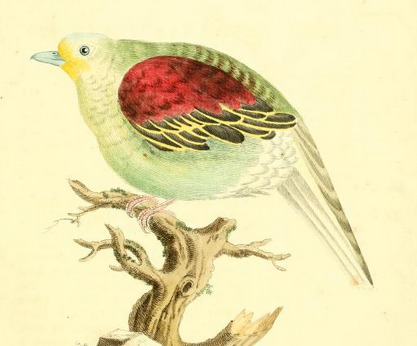
The dazzling pompadour green pigeons, now considered a complex of half a dozen similar and closely related species, were named in 1776 by the English naturalist and painter Peter Brown.

Brown, pompadour pigeon

Why would an Englishman name a Sri Lankan pigeon for a French courtesan, dead these dozen years? He didn’t.

Brown’s description is quite clear: the bird’s name memorializes not the late Marquise, but the shade of the wing coverts, “a fine pompadour color.” True, the color was named for Louis XV’s mistress, but the bird, alas, not.

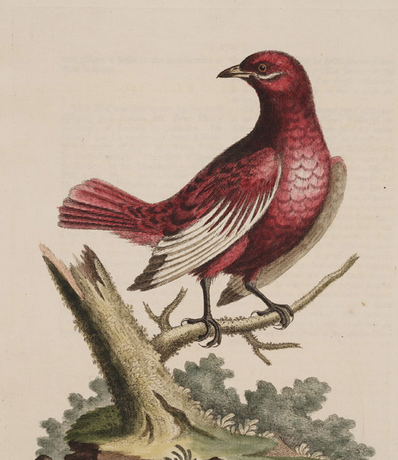
If the pigeon is attractive, the pompadour cotinga is spectacular.

Edwards, pompadour cotinga

Both sexes of this species were represented in French collections during Mme de Pompadour’s lifetime, but it was known only by the relatively dull descriptive name “cotinga pourpre,” the purple cotinga.

In the year of the Frenchwoman’s death, Peter Simon Pallas gave the species a Linnaean name, Turdus puniceus, simply a translation of the Brissonian name. But that same year, 1764, George Edwards renamed it in his Gleanings.

Edwards had acquired his specimen in an extraordinary way. Post-Captain Washington Shirley of the British navy, soon to be named Earl Ferrers and eventually made a vice-admiral, captured a French ship — and found among the prize cargo a “curi0us parcel of Birds” said to be addressed to Mme de Pompadour herself. Edwards was given access to the specimens, at least two of which he described. This one

being a Bird of excessive beauty, I hope that Lady will forgive me for calling it by her name,

“The Pompadour.”

I do not know whether she ever saw Edwards’s portrait of the bird or read the slightly back-handed compliment in his description. If she did, I suspect she might rather have had her bird skins.

Share

Poor Pompadour

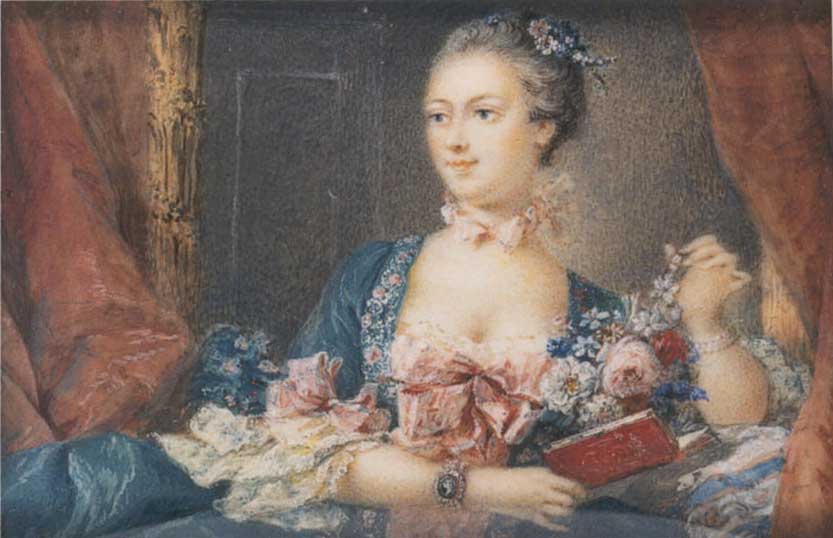
Poor Mme de Pompadour. I suppose it’s one of the occupational hazards when you are official mistress to the king, but not everybody at the court of Louis XV seems to have liked her.

Even the king found her difficult at times.

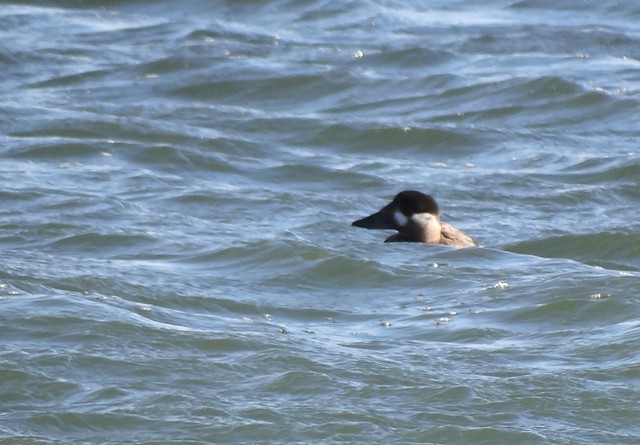
I really want to please Louis, but alas, sometimes he thinks I’m a scoter.

Surf Scoter

An odd insult, but a cruelly skillful one indeed. As a cookbook published for the preceding Louis had explained,

The scoter is a fish-bird…. It counts as a fish because it has cold blood, which is the only criterion for us to distinguish between foods that can be eaten on fast days and those that cannot.

Poor Mme de Pompadour — née Poisson.

Share

An Eerie Scene from the Trenches

A hundred years ago, the French soldier Albert Hugues wrote from the trenches near Reims:

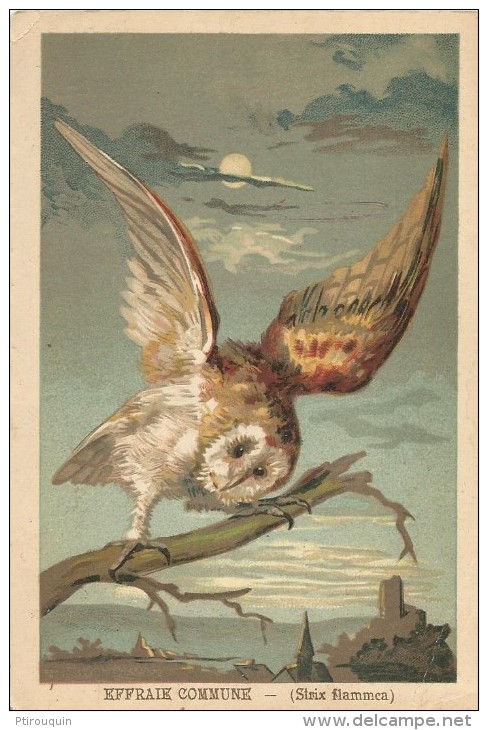
Sometimes even the night birds visited us, and the play of the searchlights, the flash of the rockets were part of a nocturnal spectacle these birds had grown used to.

One night around midnight, the sole sentinel of a small patrol positioned in front of the trenches and 200 meters from the enemy line, I was visited by an owl, which perched on a tree 15 meters from my patrol’s place. The bird stayed for a good ten minutes, and neither the shots fired from the enemy trenches nor the heavy tread of the men on watch atop the concrete walls disturbed the bird at its own watch post; the owl was the only witness to my own vigilance and faithfulness to my duty.

Share