Join Marco and me in 2017!
Of all the tiresome tasks of travel, continuous packing and unpacking is the worst; it’s unavoidable on many birding trips, of course, but it’s still a fine treat to be able to spread out and relax for a few days at a time.

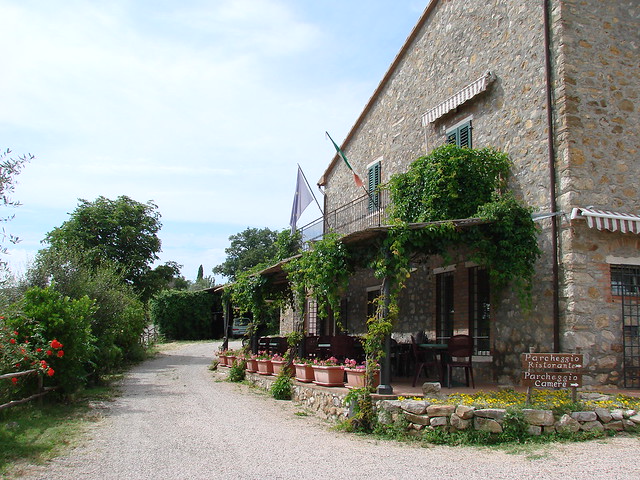
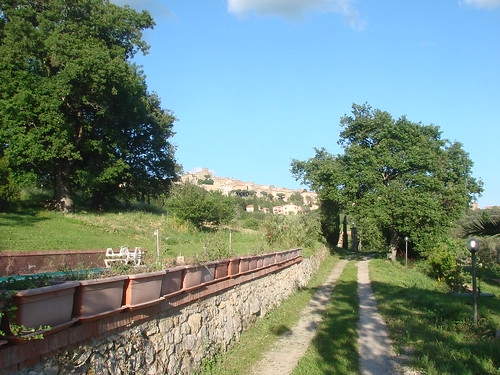
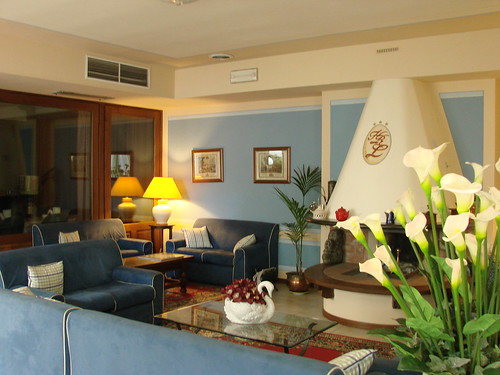
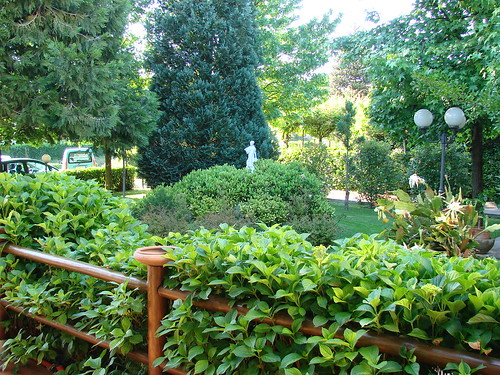
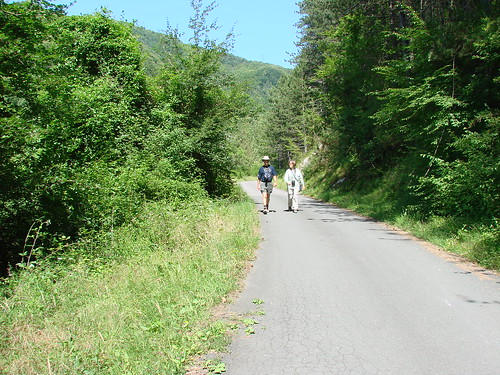
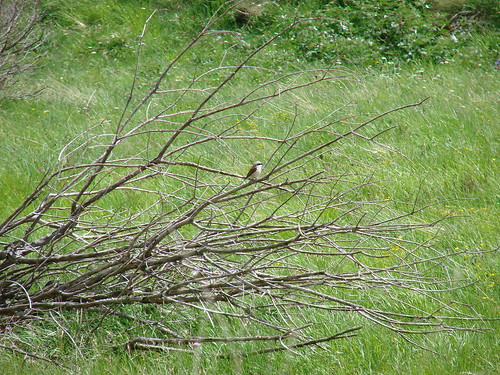
Over nearly a full week at our locanda near Manciano, we enjoyed the luxury of feeling at home—and the opportunity to get to know personally the birds we shared our peaceful setting with. Early morning walks, evening strolls, and delicious meals with open windows let us make the acquaintance of some 40 species of typical Tuscan birds, including such colorful beauties as European Green Woodpecker, Common Stonechat, Golden Oriole, and Red-backed and Woodchat Shrikes. European Scops Owls tooted at us in the evenings, and “our” Sardinian Warbler scritched and scratched familiarly each morning as we got into our minibus.
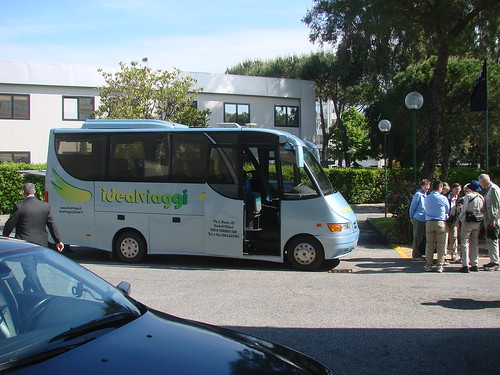
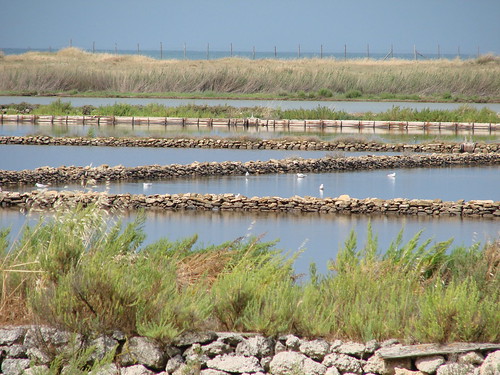
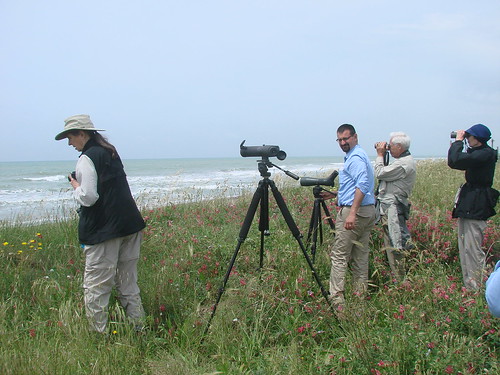
And that minibus, ably and affably driven by Gabrieli, took us to some amazing places. We began each morning with an exceptionally lavish breakfast, startlingly unlike the stereotypical dried crust and coffee of foreign imaginings, and then set off for a day of new and often unexpected experiences in the gentle hills and on the wild coast of Tuscany. Our first walk through the Saline di Tarquinia, a series of ancient salt pans transformed into an important nature preserve, introduced us to the common birds of open country and a number of aquatic species, among them an unexpected Common Pochard; well offshore, a feeding frenzy included several Scopoli’s Shearwaters, a taxon traditionally treated as conspecific with Cory’s Shearwater but now generally considered distinct.
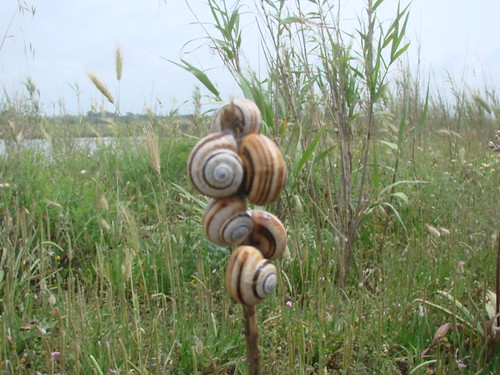
Closer in and more abundant, edible snails coated the duneside plants in dense clusters like cephalopod Brussels sprouts.
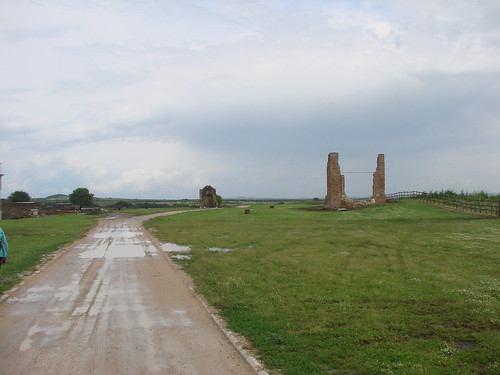
An afternoon visit to the Etruscan and Roman city of Vulci, under dramatically lowering skies, combined birds and history in the most impressive possible way as Eurasian Hoopoes and Italian Sparrows—that latter now officially “split” from the familiar House Sparrow—fluttered and chirped among the monuments and palaces once, long ago, inhabited by the women and men whose tombs now dot the tuff hills. How many generations of Common Nightingales have come and gone since the Roman road was laid down, how many Blackcaps have sung their feathered hearts out since the Etruscans first sought safety on this high plateau?
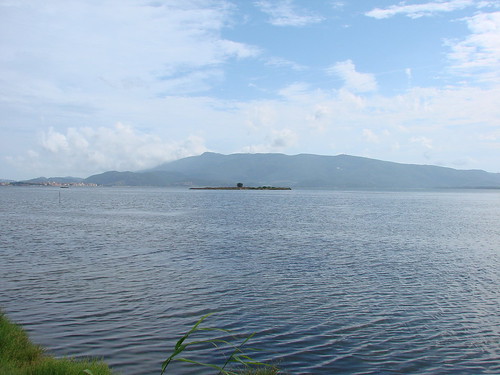
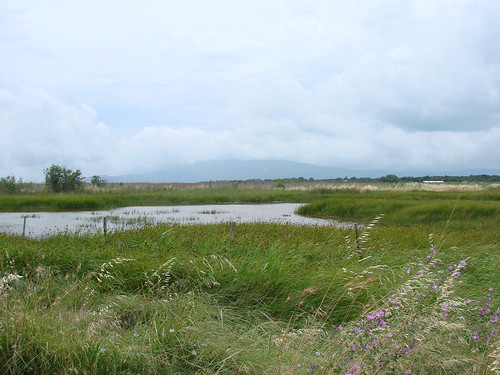
Our day around the Orbetello Lagoon was more intensely ornithological, though the vividly green Green Frogs in the tiny pond at the preserve headquarters nearly distracted us from the European Bee-eaters and Common Kestrels overhead. Our walk out to the blinds, past fields swarming with low-flying Common Swifts and zitting Zitting Cisticolas, took us to some of the most important wetlands in Italy. But it was the tiny pond at Albinia that had given us the day’s most surprising bird. While we admired our first Black-winged Stilts, a drake Ferruginous Duck landed, steamed towards the reeds, then took off again; globally scarce, the species winters in the area, but to find one this late in the season was a happy shock.
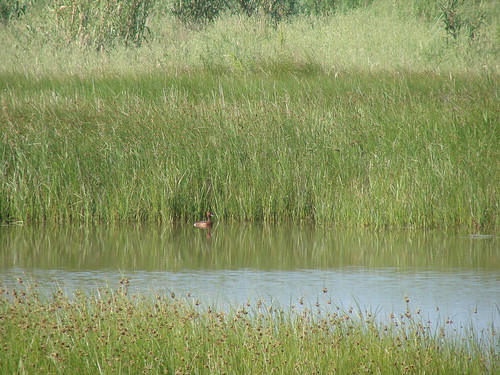
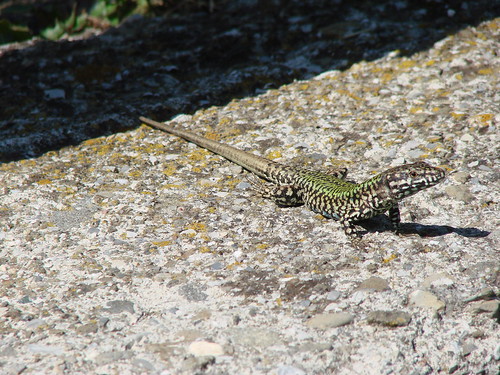
After lunch on Orbetello’s main square, we boarded our blue chariot again for a drive out onto the Argentario, the bulky promontory that protects the lagoons from the sea. Lizards and wildflowers were our principal objects of interest until we reached a breathtaking overlook above a snazzy Mediterranean resort (rumored to be favored by the queen of the Netherlands). A European Honey Buzzard appeared high in the sky, followed almost immediately by a close view of a Pallid Swift, its contrasting wing pattern and subtly paler body obvious—uncharacteristically obvious!—among the abundant Common Swifts.
One of the clear high points of the tour, ornithologically and culturally, was our morning in the Etruscan necropolis of Cerveteri.
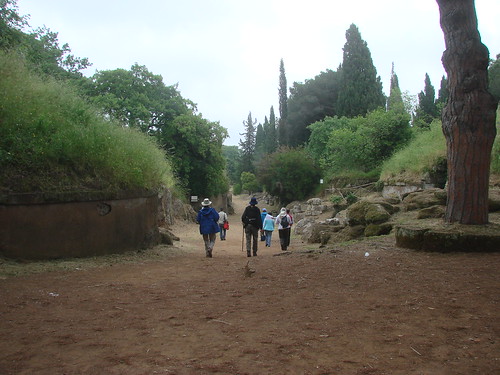
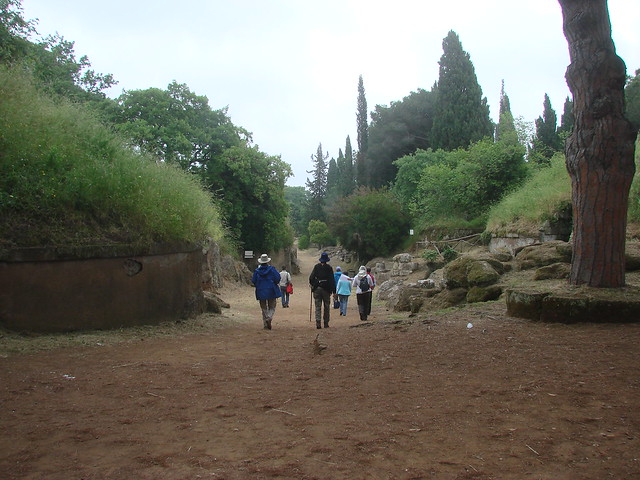
Cerveteri is a huge complex of wide avenues, monumental tombs, and ancient trees, full of ghosts and nightingales. Barn Swallows—longer-tailed and brighter beneath than elsewhere in the species’ tremendous range—nest in the tombs, and Firecrests and Winter Wrens (likely a different species from either of the North American representatives of the taxon) hiss and bubble from the tall pines and lush undergrowth. We had the place nearly to ourselves, with only a few schoolchildren arriving as we made ready to leave, and the combination of Etruscan spirits and Sardinian Warblers made a deep impression on all of us.
The bas-reliefs in Cerveteri’s Tomba dei Relievi, miraculously well preserved, are a principle source for our understanding of the Etruscans’ material culture. The painted tombs of Tarquinia—not far from the salt pans where we’d started the tour—are another, full of scenes of daily (and nightly) life from almost three millennia ago. We joined valiant battle with what seemed like thousands of school classes here, and emerged more or less victorious and more or less unscathed from the encounter; happily, the paintings are behind glass, out of the reach of grubby fingers.
After lunch on the medieval ramparts of Tarquinia, where a Red Kite passed at eye level, we crossed the street to the fifteenth-century Palazzo Vitelleschi, a curious and intentional mix of Gothic and Renaissance architectural elements that now houses the National Museum of Etruscan Art.
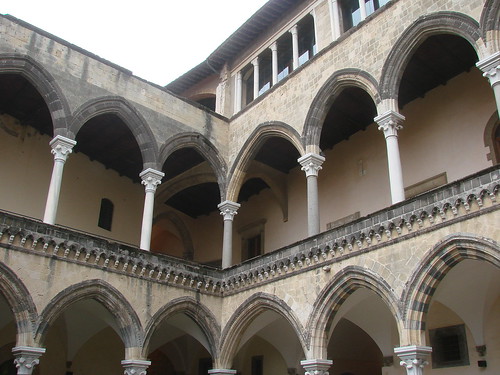
The collections here are so rich that many of the larger objects from the period of Roman contact—that is to say, from the third century BC and later—have to sit out in the courtyards, leaving the cases inside to rows and rows of exquisite vases and other works produced by this mysterious culture. The most impressive artifacts are certainly the sarcophagi, ornamented with effigies of the deceased and some of with Etruscan inscriptions. A full day would have been too short for an exploration of this spectacular museum, but even our couple of hours left us with a taste of how rich life must have been in the great Etruscan city-states some 2,500 years ago.
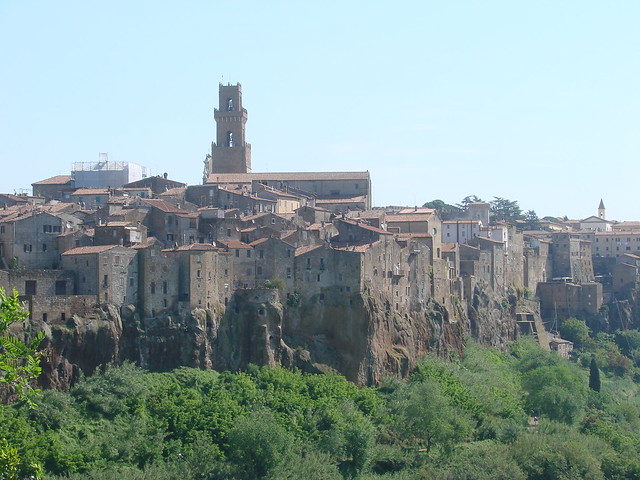
Life didn’t end with the Romanization of the Etruscans, of course, and Tuscany is full of architectural monuments and cultural jewels from all periods of European history. The Middle Ages, the most fascinating and the most important centuries to the development of western culture, are abundantly represented, and hill towns like Pitigliano are a visible reminder of what life must have been like atop the sheer cliffs of central Italy in those turbulent times. The view from across the deep valley is impressive enough, with houses growing out of the living rock, but the village itself, with its beautifully preserved medieval buildings, is a reminder that time does not stand still.

The curiously named Jerry Lee Music Hall and Bar is decorated with colorful sculptures à la Hundertwasser, and the fine food we enjoyed while seated in a fifteenth-century cistern certainly surpassed anything available five hundred years ago—as did the wine we tasted on a narrow village street, laundry drying above (and falling on one participant’s head, a true medieval touch if ever there was one).
One good glass deserves another, and so it was off to Scansano for more of Tuscany’s best-kept liquid secrets. The contrast could not have been greater as we sat in the ultra-modern tasting room at Erik Banti, the medieval skyline of Scansano above us and our minibus just a few steps away. Temptation finally overcame us, and we lingered long in the winery’s shop before leaving laden with bottles, corkscrews, and jars of truffles.
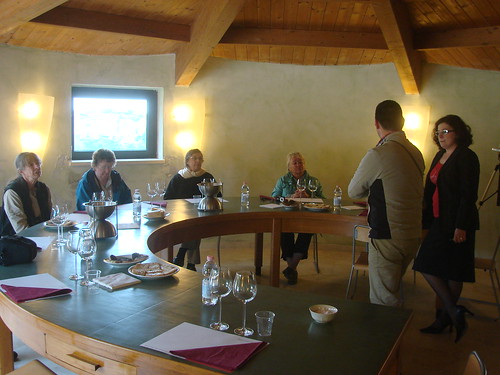
That evening, like all the others, brought us another incredibly fine Tuscan meal, made with the freshest of local ingredients. Our locanda boasts a profoundly talented and infinitely accommodating chef, and Irene rose to all our various demands—for early breakfasts and early dinners, special diets and requested favorites—with graciousness and skill. Grateful, we gave her two nights off and explored other excellent restaurants in the area.
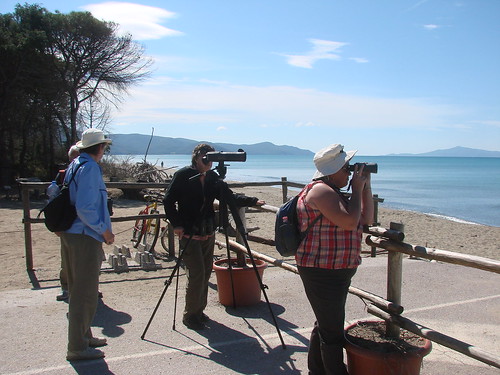
The Mediterranean was visible from our hotel, a flat blue sheet between gentle hills, and the allure of the sea proved irresistible again and again. Nowhere is the coast more inviting than in the Maremma, a wild landscape of mountains, fields, and wetlands. While some of us hiked to the mouth of the Ombrone, the rest stayed on the beach, scanning the bright horizon until a distant feeding frenzy yielded a score of Yelkouan Shearwaters and a few Scopoli’s among the Yellow-legged Gulls.
Our drive out from this coastal wilderness was interrupted by the entire tour’s best views of European Turtle Doves, their rich colors on full display as they perched nearby on the fence.
After lunch we crossed the Ombrone to Diaccia-Botrona, one of the most important wetlands remaining in Tuscany. Our arrival was delayed by an astonishingly confiding and typically photogenic female Red-footed Falcon, a scarce species we had hoped to run into but dared not count on.
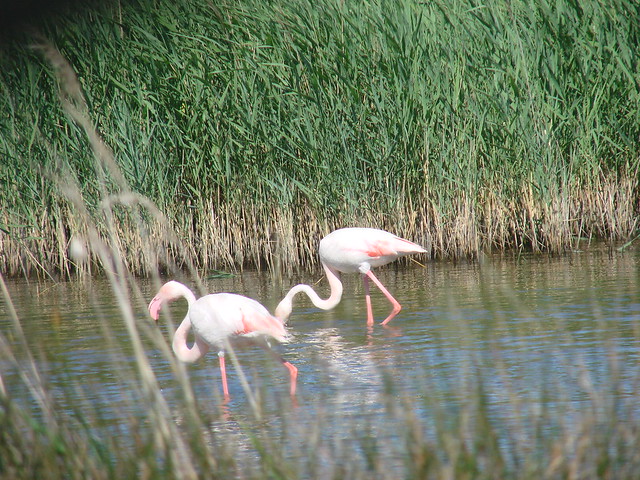
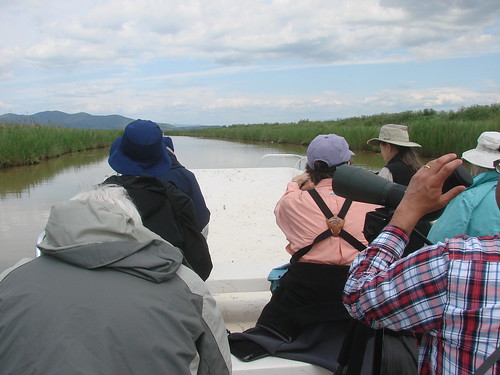
Once at the wetland preserve, we were kept busy by Squacco Herons, which were almost constantly in view as we waited for the arrival of our big flat-bottomed boat. We sailed gently down the canal separating the salt from the fresh water marshes, stopping at blinds to watch Italian Yellow Wagtails, Pied Avocets, and the other inhabitants of the padule, as the wetlands are known in Tuscan. The one Greater Flamingo we’d seen at the Saline di Tarquinia faded in memory as we watched some 400 birds at their breeding colony, the mud volcanoes of their nests conspicuous out on the flats.
Better views of shearwaters and other seabirds awaited us on our ferry ride to Giglio Island.
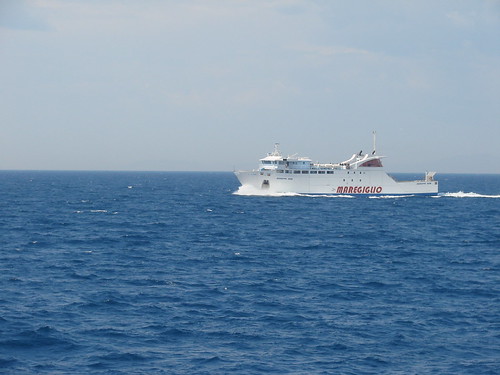
To say that the outbound ferry was not built with birders in mind would be a scandalous understatement, but we were fortunate enough to take a larger, more sensibly designed, and less crowded boat back to Porto San Stefano; the return trip gave all of us good, close looks at both shearwater species, three Shags of the bright-billed Mediterranean race, and a late Northern Gannet. Between those mini-pelagic trips, we wandered the fascinating streets and alleys of Giglio Castello, perched high above the sea and with marvelous views of Monte Cristo, Elba, and Corsica in the distance.
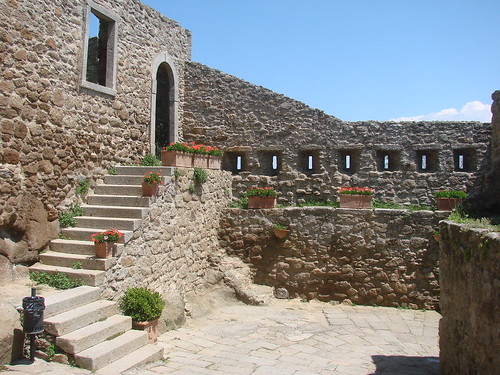
The Castello was built to protect the island from Libyan pirates, and the most significant battle in the centuries-long contest was fought in 1799—at almost exactly the same time as the young United States was at war with the same buccaneers. We ended our walk with fresh fish served in an ancient olive pressing cellar carved right into the island’s rock. Ice cream called in Albinia, as on most of our days afield, but the local pond stubbornly refused to reveal its rarities.
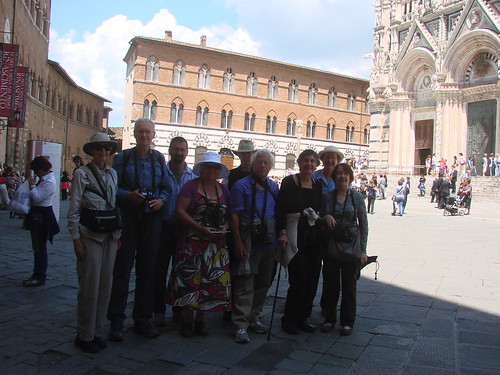
It would have been easy to spend our entire time in our Manciano neverland, but more treasures awaited us in Siena and Florence. A coffee stop below Civitella Paganico gave us more European Bee-eaters and a breathtakingly expansive view of the Tuscan countryside. Our trusty bus left us at the checkpoint in Siena, from where we hiked across the walls of the Medici fortress and into the medieval city on our way to the Piazza del Campo and the cathedral.

The walk, uphill and down, past Western Jackdaws and Common Wood Pigeons, proved longer than anticipated, but our reward at the end of it was the Opera del Duomo, one of the finest museums in Europe. The original statues from the cathedral’s west front (actually the face of what was originally planned as the south transept) lose nothing of their grandeur seen up close, and Duccio’s Maestà, like all of the master’s works, fully deserves its place among the masterpieces of the western tradition.
We would see more Duccio later that afternoon in Florence, where our first stop after checking in to our hotel was the Uffizi Gallery. As overwhelming as Siena’s Opera del Duomo is intimate, a stroll through the Uffizi is like walking through the pages of an especially well-illustrated art history textbook. Cimabue, Giotto, Duccio came first; then it was the Sienese school and Simone Martini, followed by all that Botticelli, then the northerners, and then, if only for the sake of completeness, the Titians. After two hours of greatness, the mind and the eyes and the heart were full to the point of fatigue—but the only way to exit the gallery is to pass through the temporary exhibitions, this time a huge show devoted to Caravaggio and his imitators. A very good dinner just a couple of blocks away restored us, physically at least, and made it easier to face our return to Florence’s very own Fawlty Towers for the night.
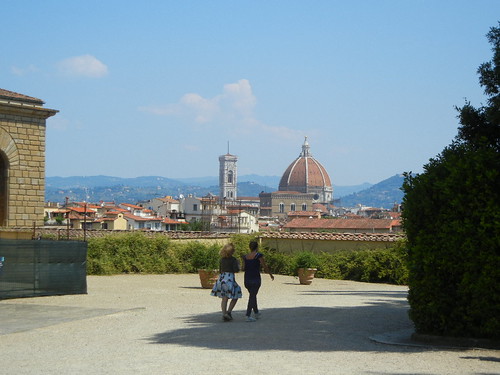
The not very funny comedy of hotel errors continued the next day, but visits to the cathedral, the exterior of the baptistery, and Giotto’s perfect campanile provided more than enough distraction. A Peregrine Falcon, mercilessly mobbed by Common Swifts, was a noisy surprise low over Brunelleschi’s famous dome.

Our final stop of the day was Santa Maria Novella, a serious contender for the title of most beautiful church in Italy; Giotto’s Crucifix took our breath away inside, and the remex of a Tawny Owl surprised us on the lawn in the cloister cemetery.
We’d seen a lot in a scant twenty-four hours, and it was with some relief that we left Florence for the mountainous north. As we entered the lovely Garfagnana Valley, we stopped along the Serchio to visit the Ponte della Maddalena—more popularly and more scurrilously known as the Ponte del Diavolo.
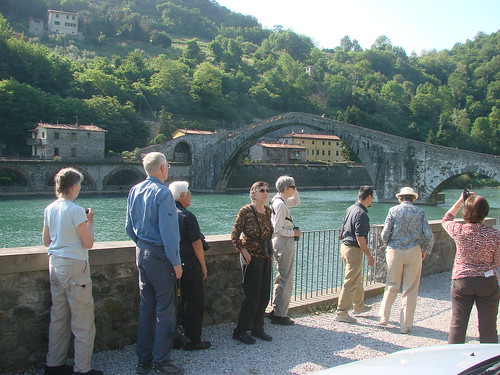
Probably dating from the late twelfth century, the bridge is notorious for the extravagant, almost ludicrous height of its major span, a structure, as legend has it, that only the devil could have made stand. It was here that we found our first truly high-elevation birds, a pair of European Crag Martins flying around what must have been their nest site in the bridge itself.
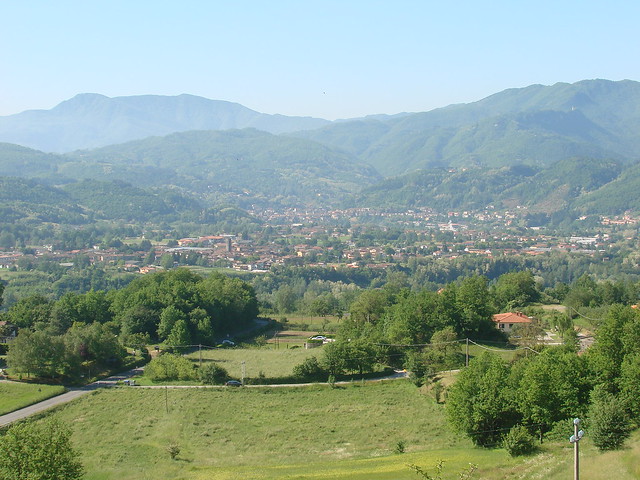
Our Castelnuovo hotel was a welcome sight, and we gathered outside in the warm evening air to review our day and to plan the remaining days of the tour. We awoke the next morning to bright views of the Apuan Alps and the loud fluting songs of Blackcaps.
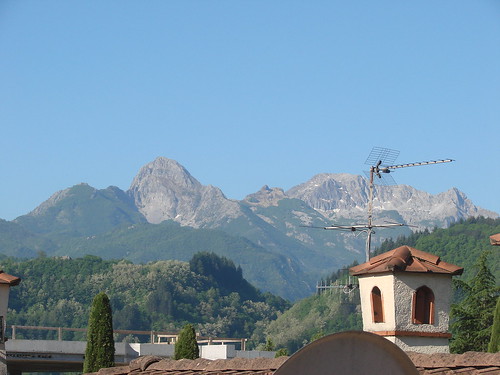
Our new bus, this one driven by Ubaldo, took us up, up, up into the Apennines, where Common and Black Redstarts joined White Wagtails on the roofs of Castiglione; a Cirl Bunting sang from the top of a fir, framed by a medieval archway opening onto the countryside.
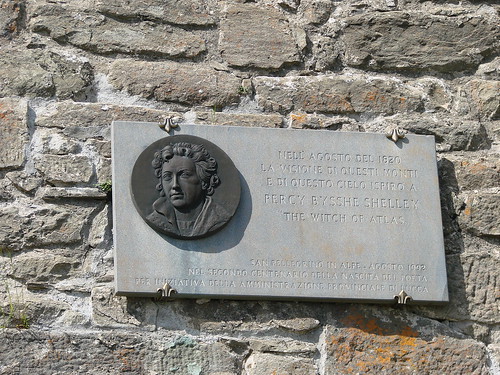
We found the pilgrim hostel of San Pellegrino busy and noisy with maintenance workers, but the views out over the Garfagnana were as breathtaking as ever; it was easy to imagine Shelley finding inspiration in a place so dramatic and strange.
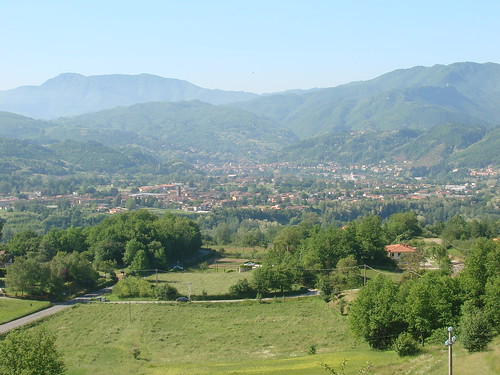
A Common Raven overhead was one of just a few individuals of this species found in central Italy; we would see another later that day, and a third would complete our tally in the Alps the next morning.
After an excellent lunch across the street from the hostel, we made the quick drive to Sassorosso, so named for the distinctively red stone used in the local buildings. We headed straight for the highest overlook in hopes of a raptor or two, and were about to give up when a large form appeared in the sky. As it passed overhead, to our amazement it assumed the unmistakable form of a Eurasian Griffon Vulture, a bird utterly unexpected, we thought, in Italy anywhere but Corsica. A few quick phone calls determined that there are in fact two reintroduction programs underway in the country, one in Abruzzo and the other in the Julia region on the border with Slovenia. Presumably this bird had originated at one of those two sites; the appearance of this magnificent raptor was the highlight of the tour for many of us, its likely provenance notwithstanding.
The Apuan Alps are even more dramatic than the Apennines, a fitting place to spend the final day of our tour.
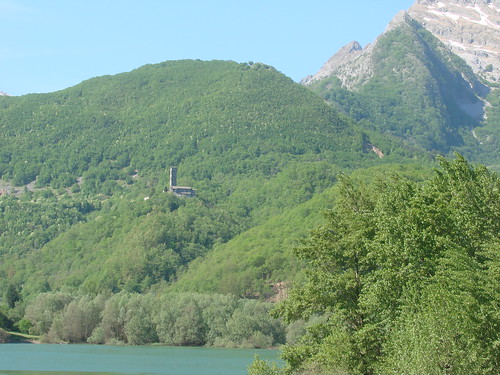
A photographic stop at Lago Gramolazzo turned into a shopping visit when we found the local ceramicist open for business; he very kindly gave us an impromptu tour of his studio and kiln, where he produces very handsome objects in traditional shapes and patterns. A large colony of Common House Martins provided the outdoor entertainment.
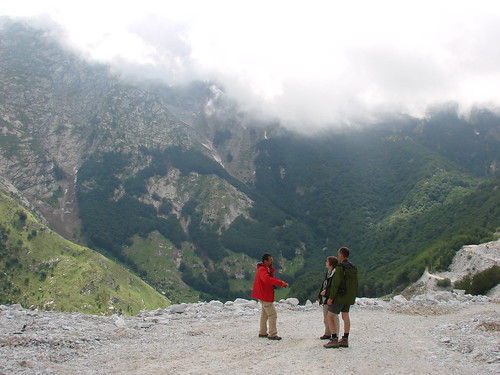
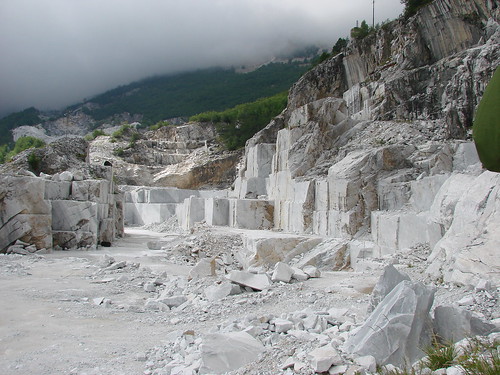
Our actual destination was the Orto di Donna, a high-elevation valley that has been quarried for marble since Roman times. We stopped for coffee at the hikers’ rifugio, then birded from the bright patio, where European Goldfinches swarmed through the conifers and a male Common Chaffinch fed briefly on the ground. Western Bonelli’s Warblers remained just a tantalizing voice, but a Common Chiffchaff eventually revealed itself for long scope views, the first good look we’d had at the species.

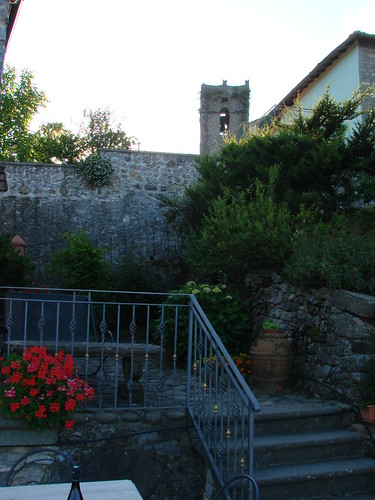
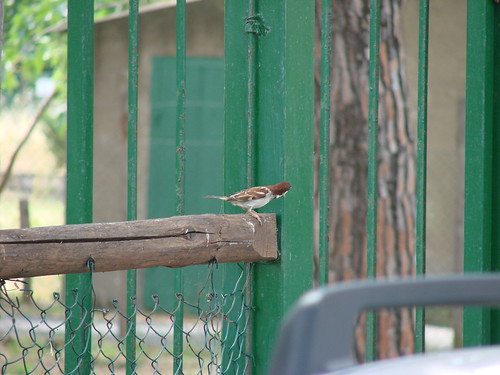
After a short walk up the road, it was time for lunch. A promising church tower forced a detour, however, and we found Pieve San Lorenzo to be a tiny jewel of a Romanesque church, simple and severe; it was equally appealing to a pair of Eurasian Tree Sparrows stuffing their young fledglings on insects captured from the building’s nooks and crannies.
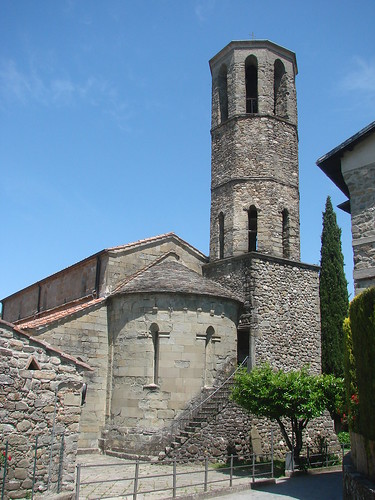
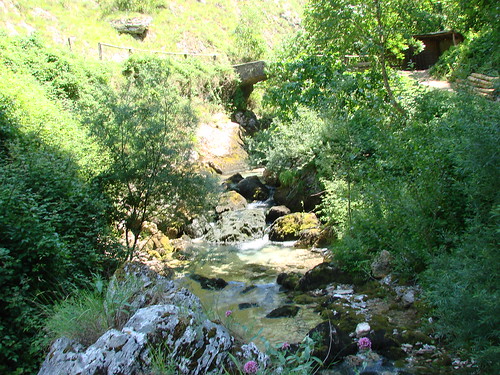
Lunch in Equi Therme was a final piece of absurdist theater. Some of us ascended to the church and its views into the steep, dark canyon, while the rest of us marveled at the fish and tadpoles in the river that pours out of it. A Common Raven played over the ridge, but the pair of Peregrine Falcons we’d seen as we drove into town did not return to their cliff nest while we watched.
Between Equi Therme and Castelnuovo is one of Tuscany’s best-kept secrets, the church of Codiponte. The interior is an elegantly proportioned Romanesque space, the bays of the nave separated by columns topped with some of the strangest capitals anywhere.
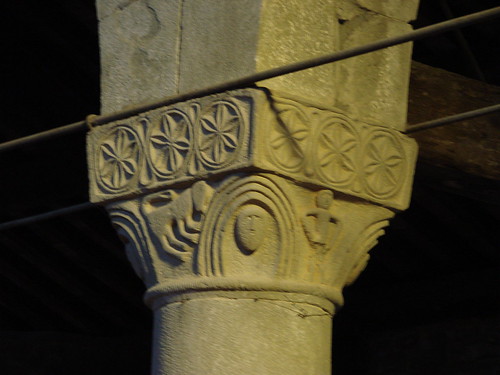
Art historians, as puzzled as the rest of us, style their ornament simply and uninformatively “proto-Romanesque,” monsters and fanciful beasts whose stern symmetry and mysterious meanings recall the decoration of the Etruscan tombs with which we’d begun our explorations.
There are places in Europe where natural history and cultural history merge, and Tuscany—the heart of ancient Etruria—is one of the most eloquent examples. European Bee-eaters nest on the same tuff banks out of which the Etruscans carved their tombs, while breeding Peregrine Falcons fly screeching over the heads of visitors to Florence’s magnificent cathedral. And no visit to the steep Apennines of northern Tuscany is complete without a stop at the Ponte del Diavolo, where European Crag Martins dart in and out of the thousand-year-old bridge. We experienced all this and much more, and we look forward to exploring more of the cultural and natural landscapes of Europe in the years to come.