Yes, I’m still batting 1000 when it comes to fork-tailed flycatchers in New Jersey: Even with the bird’s street address in hand, I missed yet another one yesterday afternoon at Cape May.
And you know what? It doesn’t bother me in the least.
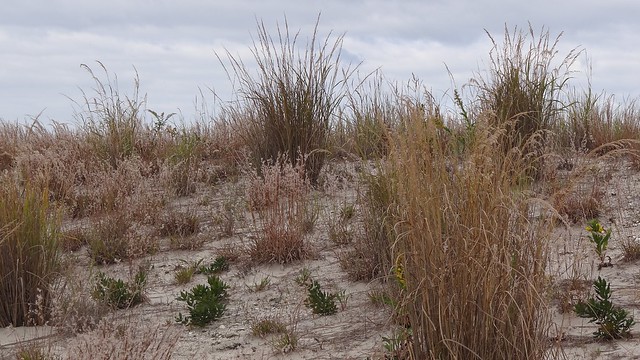
Now that we’re almost three full hours away from New Jersey’s southernmost wedge of sandy land, we don’t get to Cape May very often. Back when we lived in that small central Jersey town with the large university, it seemed like nothing to drive two hours each way for a day with the sea and the sun and the birds, but for some reason the additional 50 minutes or so of parkway dampens my enthusiasm. And now that we live with a big dog, and on one academic salary to boot, staying over for a night or two or three has become a near-impossibility.
And so I looked forward that much more to getting to spend two days down that way this weekend, thanks to Scott & Nix and the Cape May Autumn Weekend. Wednesday night I packed my satchel, moved the slides for my lecture onto one of those magical memory sticks, and slept a few fitful hours before hitting the road (the already busy road: what are non-birders even doing up at such an hour?).
I pulled into the parking lot at Higbee Beach at the magical, still dim hour of 7:05, and already there was something in the air. Lots of somethings, in fact.
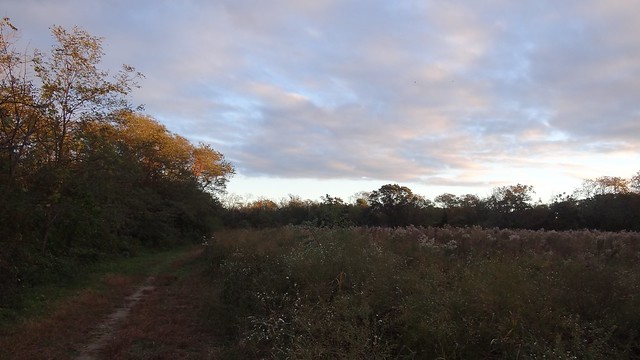
The flight was steady and thoroughly October-like, dominated by myrtle warblers and ruby-crowned kinglets — so many of the latter flashing by, at all heights, apparently entirely unconcerned by my presence, that I began to worry my corpse might be found in the first field, covered with tiny puncture wounds. Pine siskins, purple finches, blue-headed vireos, chipping sparrows: It felt great to stand with the wind at the back, watching hundreds and thousands of birds dart overhead or pause in the brightening trees.
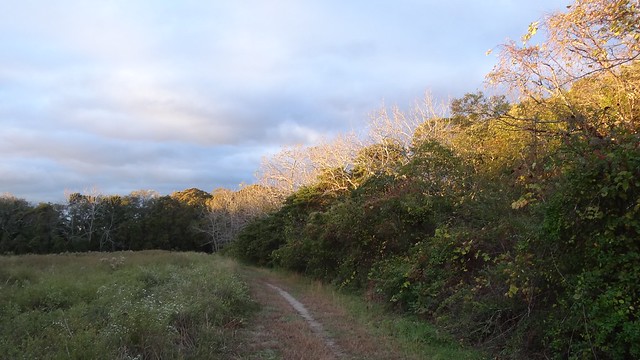
The odd merlin and a constant stream of sharp-shinned hawks were enjoying it, too. Watching them partake inspired me, and as things slowed down around 9:30, I set off in search of my own breakfast. On returning to the parking lot, I found this gang staring down at me.

When the black vultures are up, it’s time to head for the hawk watch. I stepped out of the car to find a bird even bigger than the vultures, and more surprising, low overhead.
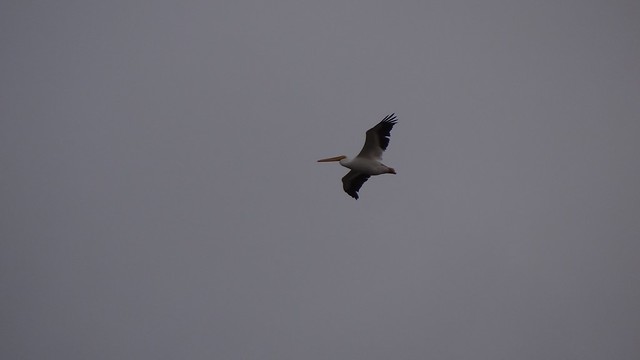
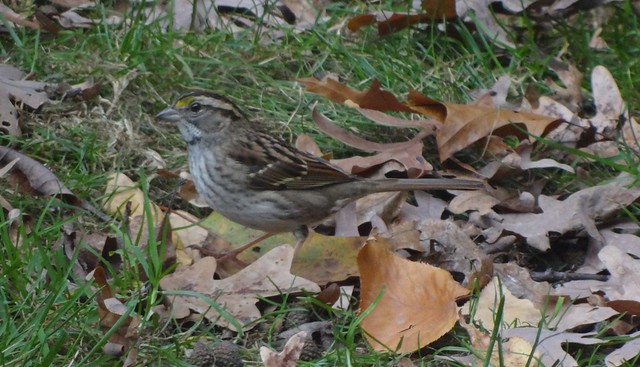
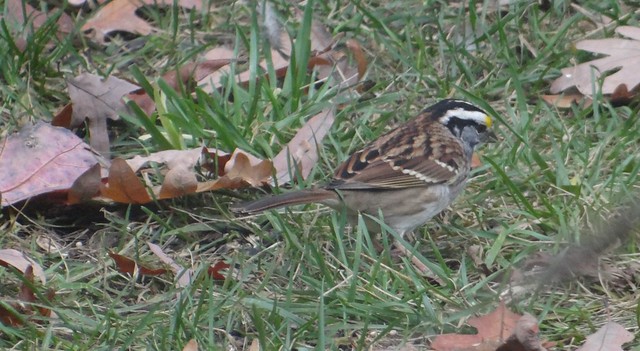
This American white pelican made me wonder whether there was any reason to venture beyond the parking lot. There probably wasn’t. Palm warblers, Savannah sparrows, and white-throated sparrows thronged the edges of the lot, and if I’d been just a little bit taller, I might even have seen this snazzy drake Eurasian wigeon without stepping off pavement. It turned out to be the first of three or possibly four of that usually uncommon species I would run into — more like Vancouver than New Jersey.

After a few minutes up on the platform — just enough, I hope, to prove myself not entirely asocial — I retreated to the solitude of the beach, where I could sit and watch the sparrows and warblers and kinglets on the dune while royal terns and black and surf scoters flew up and down the shore.

At Cape May, you always want to be looking every direction at once, one eye on the sand, one on the water, one on the sky. That goes double (and that’s six eyes, for those keeping count) if you happen to be a potential prey item, I suppose.

There was a good variety of hawks and falcons keeping the littler birds on their toes. I was happy to see a few broad-winged hawks, a little on the late side for that species, but the highlight for me, as on most late October trips to Cape May, was the chance to see red-shouldered hawks. Long ago someone let me in on a little secret: if you take up residence on a certain bench along a certain trail in the state park, the red-shoulders sometimes pass by nice and low, presumably hunting the treeline rather than spiraling anxiously higher and higher as they tend to do at the hawk watch proper.
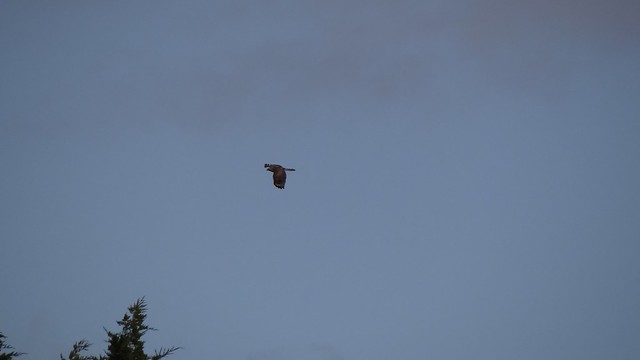
There weren’t many during the couple of hours I perched comfortably on my bench, maybe half a dozen, but they included one rosy-breasted adult — and the views were great, low and close.

The only bad thing about an October day in Cape May is that dusk comes so soon. I’d booked my hotel in Absecon so that I could spend the evening at Brigantine, and already it was time to head north.
By the time I was out on the dikes in the late afternoon, the wind — the same wind that had made Higbee so good nine hours earlier — had calmed somewhat, and I was able to be out of the car and scoping comfortably. The birdlife was decidedly autumnal, with the beginnings of a nice selection of ducks, scattered flocks of Atlantic brant, and with the exception of a single juvenile semipalmated sandpiper, only the “late” shorebirds still around. Those first small flocks of dunlin are a sure sign that the seasons are changing.
The seasons, and the weather, too. When I left the hotel the next morning at 6:00, those wonderful northwest winds were back, but the sky was clearer and the air drier than the day before: another cold front had passed, and even in the dark I was seeing passerines cross the parkway as I drove south.
If Friday morning had been lively at Higbee, Saturday the air was alive. Thousands of American robins and myrtle warblers filled the sky, with purple finches, pine siskins, rusty blackbirds, eastern meadowlarks, and a dozen other species in their wake. Even more exciting, the night had seen a big push of sparrows. Where I’d been happy to see the odd handful of slate-colored juncos on my first morning, here suddenly were great windrows of them on the paths and roadsides.
I’d intended to walk around the fields slowly, the usual routine, but I ended up standing place for two and a half hours, taking no more steps than absolutely necessary to yield the trail to other birders. My sedentary approach was less strategy than inevitability: every time I considered advancing just a little bit, another rush of sparrows burst out of the goldenrod and grass, or a winter wren hopped along the woodland edge behind me, or a yellow-billed cuckoo or yellow-breasted sapsucker swooped in to perch at close range. Or a junco, finding no easier perch, landed for a breath-taking moment on the long lens of the birder who had paused to talk.
It was spectacular, one of the most enjoyable mornings I’ve ever had birding in New Jersey, and the more exciting, as Kevin pointed out later in the day, for being most decidedly not a fallout: no wrecks, no storm-tossed waifs, no tiny creatures shivering for life in unwonted places and habitats. It was simply migration, abundant birds moving south in their abundance the way they have for a long, long time. Exhilarating and wonderful for the observer, no more hazardous than normal for the birds.
The pace had slowed by 10:00, and I was hungry. After breakfast I spent another hour watching Savannah sparrows in the dunes at the state park, then hied myself into town for my lecture. Understandably on so birdy an autumn day, the crowd was not large, but it was engaged and thoughtful — what more can one hope for?
George was good enough to take me to lunch, then we whiled away a birdy half hour at the state park before the book signing.

And then a low rumble was heard from the exhibition rooms. It was the voices of birders, the chatter taking on a new urgency. At the words “fork-tailed flycatcher,” the crowds evaporated and a parade took shape on the streets of old Cape May.
I followed. The bird was gone. But I’d had a great couple of days at what has rightly been called the center of the birding universe.