Lady Elgin and the Cormorant

Early in the morning of September 8, 1860, the Lady Elgin, a ten-year-old wooden steamship, was rammed and sunk by the Augusta on Lake Michigan, just off Chicago.

The next morning, in Boston, England, a great cormorant landed on the steeple of the church,

much to the alarm of the superstitious. There it remained, with the exception of two hours’ absence, till early on Monday morning, when it was shot by the caretaker of the church. The fears of the credulous were singularly confirmed when the news arrived of the loss of the Lady Elgin at sea, with three hundred passengers, amongst whom were Mr. Ingram, member for Boston, with his son, on the very morning when the bird was first seen.
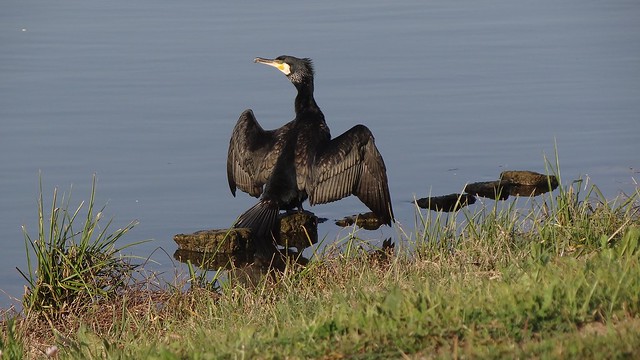

great cormorant

Share

Yellow-shafted Flicker

Sure, it’s tough living on a continent without hoopoes. But this time of year, over much of North America, our big brown terrestrial woodpecker makes up for it.

Northern flicker

Share

Dialogue in the Drawers

Screenshot 2015-09-05 14.30.16

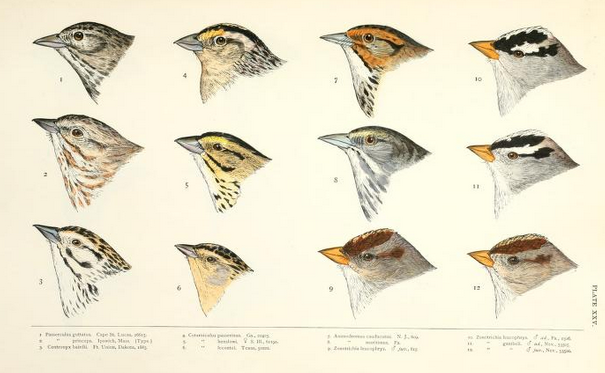
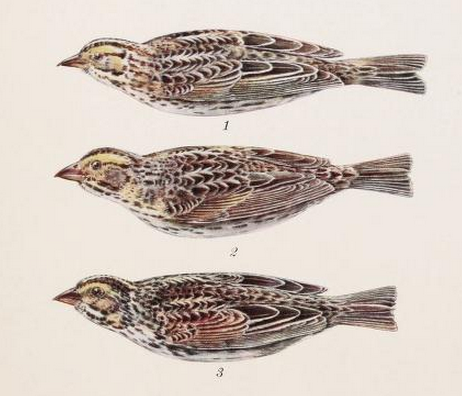
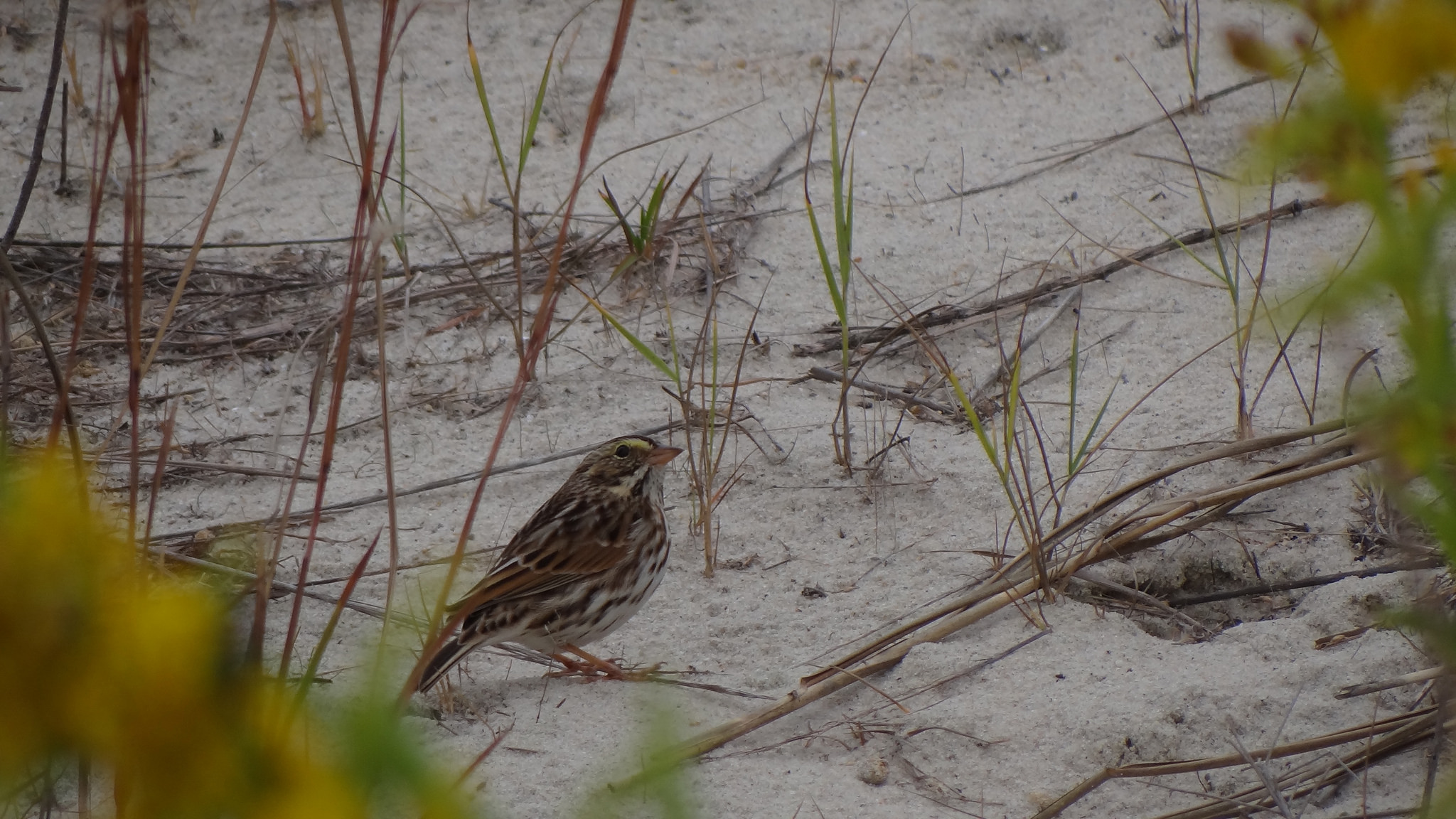
If you’re not already crazy, thinking hard about Passerculus sparrows will drive you there fast.

15632006225_1b6081314c_k

The only consolation: greater spirits than ours have been confused by these streaky devils.

Robert Ridgway corrected the labels of the co-types of the San Benito sparrow to read “P. guttatus Lawr.!”

I assume it was the explanation point that rankled. In any event, not long thereafter, Elliott Coues corrected his corrector, adding beneath Ridgway’s notation the words “Scarcely! stet sanctorum–C.”

I don’t know whether the two actually ever sat down to talk about those skins. But each had made his point, loud and clear.


Share

Smelly Sparrows

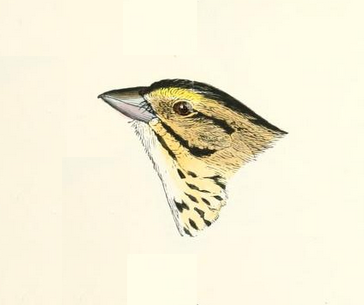
One of my favorite lines in the history of American ornithology comes from J.P. Giraud‘s description of one of my favorite birds, the Henslow’s sparrow.

Henslow sparrow, Robert Ridgway

Shotgun birders like Giraud found this species no less maddeningly elusive than today’s observers. Happily, though, writes Giraud,

from the eagerness with which it is pursued by dogs, we may infer that it possesses considerable game effluvia.

As late as the 1970s, it seems, hunters in Louisiana were complaining that their dogs were pointing these grassland “stinkbirds” instead of quail.

Gellert, you have a mission.

Share