Cast Photos: “Sanctuary”

Percy MacKaye’s fantasy masque “Sanctuary” was quite a big deal in the early part of the last century. It quickly became a standard part of the program whenever a bird refuge or nature center was dedicated, and inspired everything from songs to high-design bird baths.

The play was premiered in September 1913 at the dedication of the Helen Woodruff Smith bird preserve in Plainfield, New Hampshire. The cast at this first performance was an illustrious one:

Screen Shot 2016-06-17 at 6.34.43 PM

Both Eleanor and Margaret Wilson took part in this first performance, Margaret singing the prelude and her sister taking on the role of Ornis, the collective spirit of birddom.

The author’s daughter, Arvia MacKaye, “fell into reverie” as the prelude was sung — a prelude credited in later publications to her own precocious pen.

Screen Shot 2016-06-17 at 6.41.32 PM

Joseph Lindon Smyth and Percy MacKaye himself played the leading roles of the Faun and the Poet.
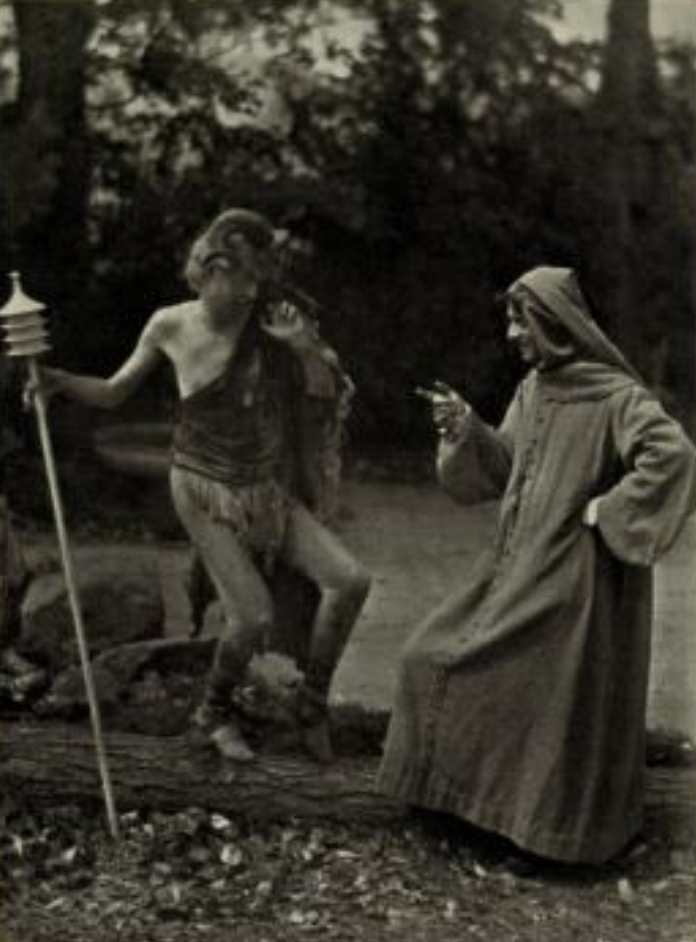
Screen Shot 2016-06-17 at 6.44.40 PM

Bit parts were assigned to family members and friends. Little Arvia changed her costume to play Hummingbird, and Cardinal was the sculptor Herbert Adams.
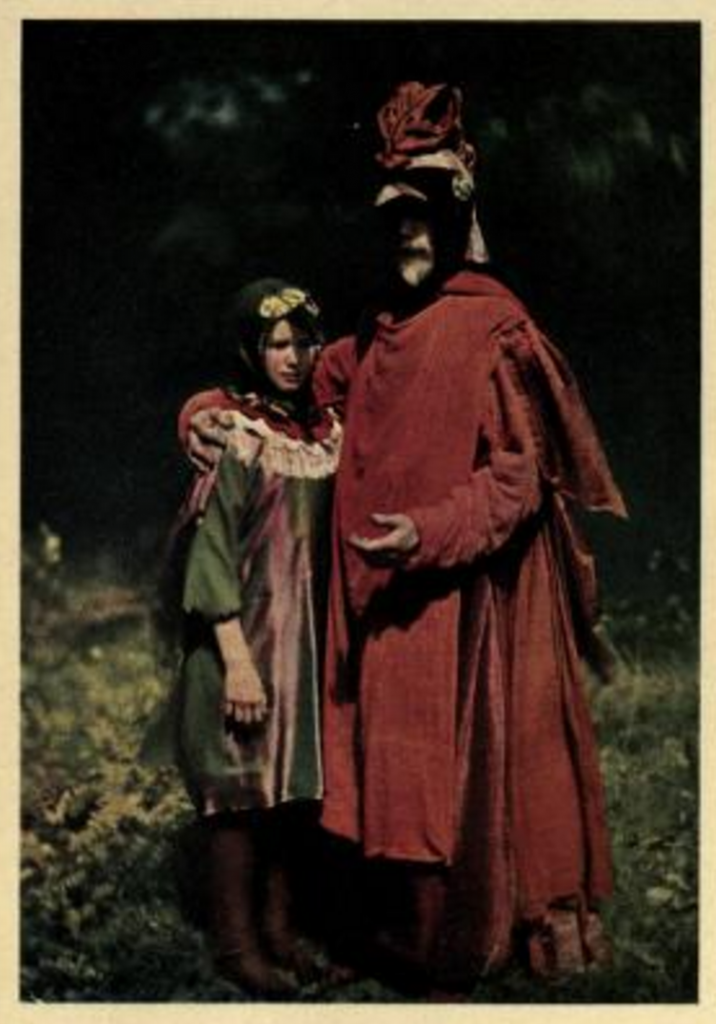
Screen Shot 2016-06-17 at 6.46.07 PM

Witter Bynner, a prolific and largely forgotten poet, was suitably fierce as the plumer Stark; happily, the masque ends with his conversion to the preservationist cause.
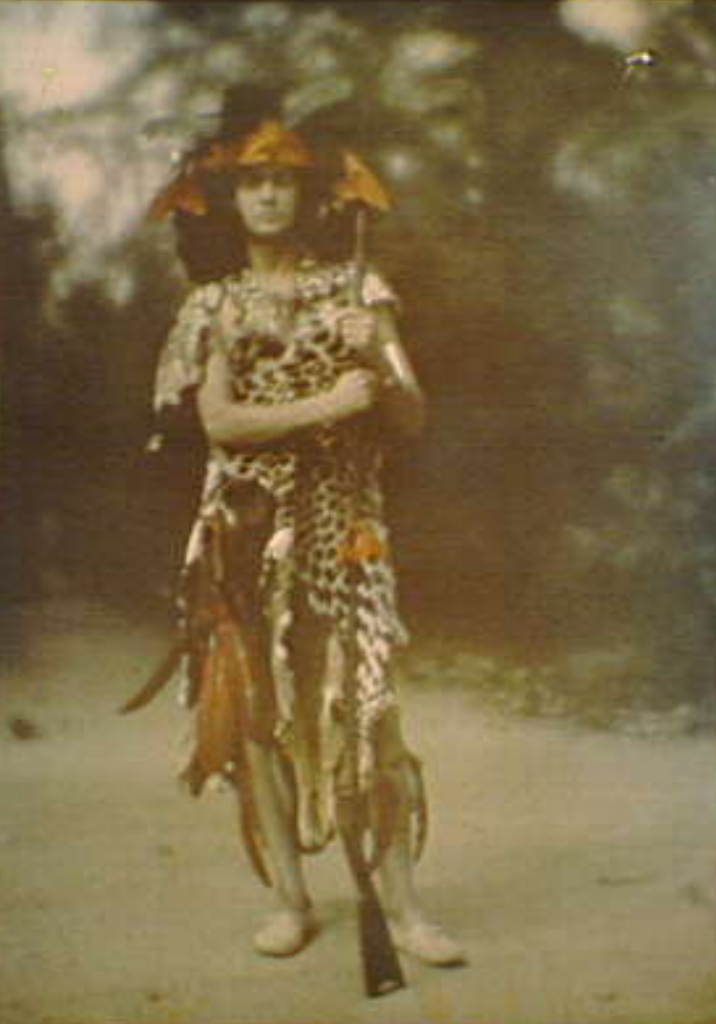
Screen Shot 2016-06-17 at 6.50.55 PM

There was another, more important conversion, too. Eleanor and Margaret Wilson’s father was named Woodrow, and the president and his wife were in the audience that September day in New Hampshire. Perhaps he recalled the play’s adjurations when he signed the Migratory Bird Treaty Act a few years later.

All of the photos by Arnold Genthe of that first, 1913 performance of “Sanctuary” are on line at the Library of Congress


Share

Happy Birthday, Fontenelle Forest

It’s one of my favorite places on earth. I learned to bird there, and I go back every spring — and whenever else I can — to catch up with the birds and the trees and the people I have been so fond of so long.

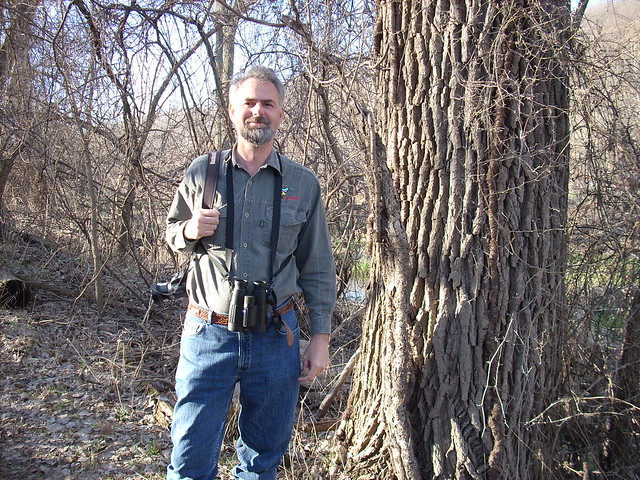
Rick at Fontenelle Forest

Fontenelle Forest was officially dedicated one hundred years ago this afternoon, when three thousand people gathered to celebrate this precious chunk of woodland just south of the largest city on the northern Great Plains.

The program began — perhaps inevitably — with a performance of Grieg’s “Morgenstimmung.” A certain Miss Hazel Silver then offered a piece less familiar to us (or at least to me) now, “The Hermit Thrush,” by F.S. Converse and Arvia MacKaye.

It seemed to be a voice of love/ That always had loved me… / My wandering love, lost yet forever heard.

Then came the afternoon’s prime attraction, a performance of Percy MacKaye’s “Sanctuary” with an epilogue specially composed for the occasion. MacKaye’s masque may have been short on dramatic tension, but its conservation message could not have been clearer — or more appropriate to the day.

 A compact, then… that when we go/ Forth from these gracious trees/ Into the world, we go as witnesses/ Before the men who make our country’s laws,/ And by our witness show/ In burning words/ The meaning of these sylvan mysteries:/ Freedom and sanctuary for the birds!

Those words still burn, and Fontenelle Forest, if it remains in hands wise enough to privilege conservation of a scarce resource over entertainment and spectacle, will keep its sylvan mysteries for another century to come.

Fontenelle forest

Share

Three Centuries of Merinos

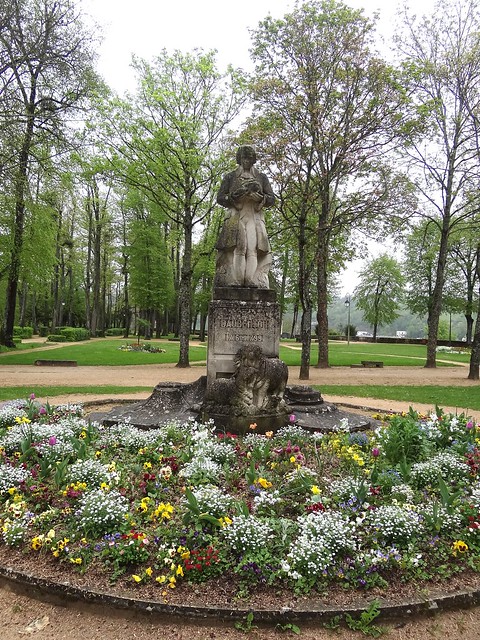
Montbard, Daubenton

Louis Jean-Marie Daubenton was born three hundred years ago today in Montbard, where his statue looks down over the city from the park named for his cousin and colleague Buffon.

Daubenton’s accomplishments in natural history were considerable, his bibliography vast. Co-author of the first volumes of Buffon’s Histoire naturelle, he was also the first director of the new National Museum, and Cuvier himself gratefully acknowledged Daubenton’s work in laying the foundations of comparative anatomy.

But today, more than two centuries after his death in 1799, Daubenton is best remembered for one thing: his connection to the merino sheep.

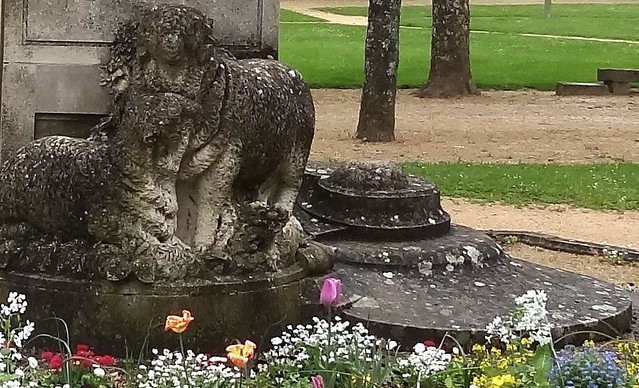
Montbard, Daubenton

Alongside his other duties, Daubenton spent the better part of three decades breeding merino rams with French ewes, hoping to produce a cross as hardy as the latter but with the fine, soft wool of the former. This was not a purely academic exercise. As Lacépède put it in Year X of the first Republic, with a nervous glance at England,

success would result in lifting the heavy yoke of foreign competition under which our own industries labor.

Similar political, scientific, and commercial interests led to the sheep crazes of the early nineteenth century. For a brief time in the United States, merino rams were fetching more than a thousand dollars at auction, and there was widespread fear that the country’s entire wool manufactory would collapse under the strain.

By then, though, Daubenton was at rest in the Jardin des Plantes in Paris, leaving to future generations of scientists and natural historians a shining example of those qualities we all could use more of:

concentration, reflection, perseverance, the wise use of our time, and the unstinting application of our energies.


Share

“Whitestart”? Just Say No

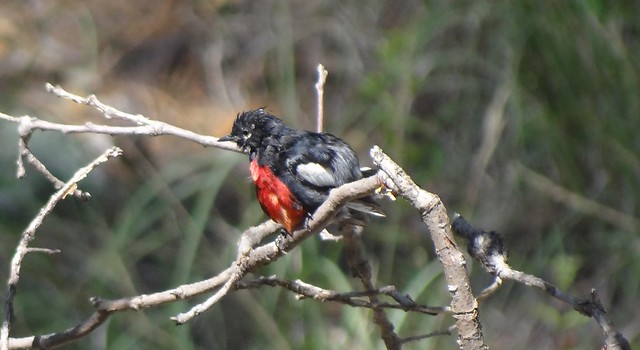
Painted redstart, Arizona, August

It matters no more to me than it does to the birds themselves what we call the warblers of the genus Myioborus. Names, after all, don’t signify in the same way as other words. Call these tropical flitters redstarts or whitestarts or falsestarts: each of those names is just as “good” and just as “bad” as the others.

Thus, the AOU check-list committee’s judgment on Proposal 2016-A-2 can go with equal appropriateness either way, retaining the traditional name “redstart” or adopting the neologism “whitestart.” It’s hard to get terribly exercised about onomastic housekeeping like this.

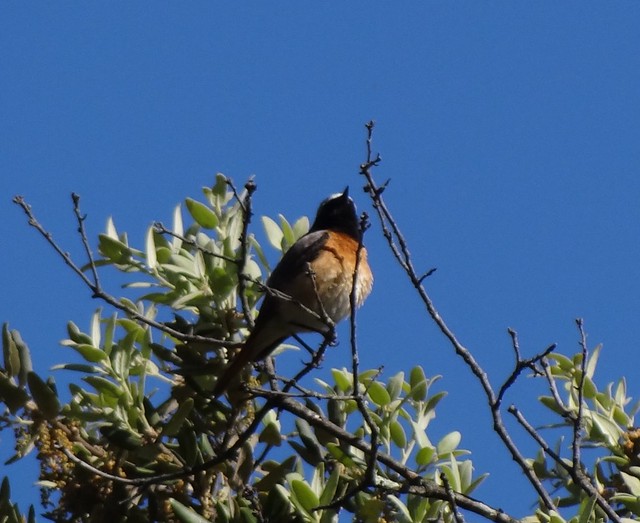
Common Redstart

But what does have my dander just the slightest bit up is the argument presented in the Proposal to make the change. It seems to go like this: the outer rectrices in Myioborus are white, not red; and

“start” of course is the modern English reflex of Middle English stert, Old English steort, tail of an animal.

Ergo, the vernacular name applied to Myioborus, with their flashy white tails, is a “misappropriation” that would “perpetuate ignorance.”

That’s not true at all (“of course”). “Start” hasn’t meant “tail” in English for more than six hundred years; if you don’t believe me, ask any other native speaker. The bird name “redstart” has been etymologically opaque for just as long. In other words, “redstart” doesn’t mean “red-tail” to any English-speaker; it refers, depending on which continent you spend most of your time on, to either a chunky chat or an active wood warbler. 

The Myioborus warblers are nothing if not active (whether they are wood warblers or not is a question for another day). Only naive pedantry can claim that their white tails disqualify them from redstartness. 


Share