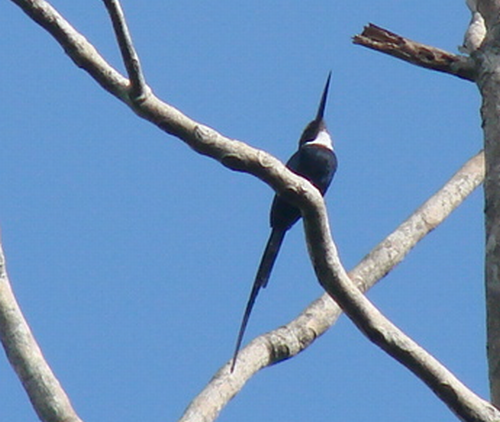
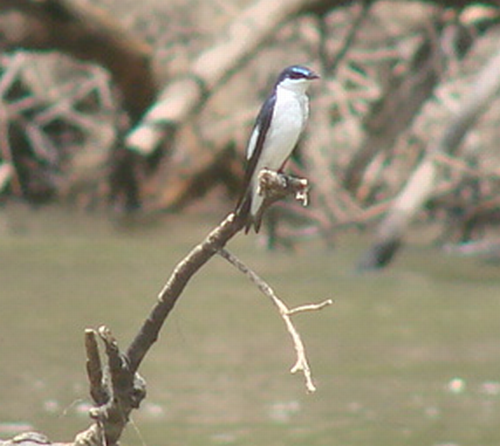
Guyana: White-winged Swallow

I’ve always loved swallows, and increasingly I think of that group as an exemplary one for the purposes of “birder education”: the family Hirundinidae shows a good diversity in habits and behavior, and provides excellent illustrations of a variety of identification features, from plumage characters to flight habit. Name a topic birders are interested in, and the swallows provide an instructive example.

And besides that, they’re beautiful, as this White-winged Swallow shows.

Share

Guyana: Sandbar Birds

The rivers of Guyana left this boy from the prairies, one who has ended up in the desert, with his mouth agape and his eyes disbelieving. Our boat travel along the Essequibo took us to several stretches where the river was 5 kilometers or more across, the opposite shore a green blur on the horizon; a few of the islands in the river, I was told, are larger than Bermuda.

Sandbars and beaches provided great habitat for a number of really fine birds. Our landing strip at beautiful Rock View Lodge hosted a Collared Plover, and Pied Lapwings, beautiful creatures that in appearance bridge the gap between the “ringed” plovers and the larger lapwings, were familiar and confiding all along the river.
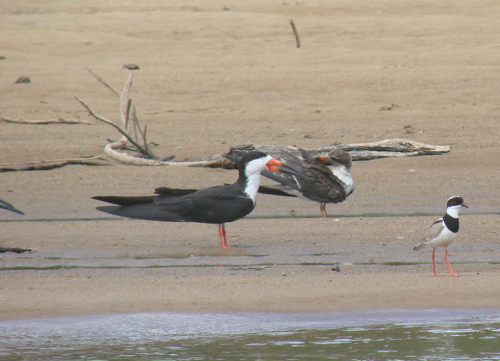
Black Skimmers were very common, too, and with them we found the occasional Large-billed Tern, a bird I had long dreamed of seeing.
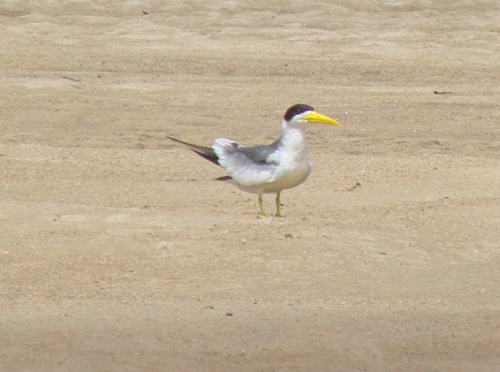
There was a mild sense of vindication when I finally saw my first of this species. Many of you will no doubt remember the Memorial Day Large-billed Tern at New Jersey’s Kearney Marsh. I don’t remember where I was the day that that bird arrived, but I do know that I was not at home, and so my phone rang off the hook all day–and I didn’t find out about the bird until hours after it had departed. A shame: now that I have seen the tern, I really wish I hadn’t had to wait so long!

Share

Tucson to Casa Grande: Birding in the Cold

Well, all right, I suppose by some standards it wasn’t that bad, but 23 degrees Fahrenheit is cold for Tucson! It had warmed up nicely, approaching 60, by the time we hit Casa Grande at 3:00 this afternoon. But Katie, David, Graham, and I hardly noticed the weather all day: there were too many birds to distract us.

We started in the chilly dawn with a fluffed up Western Screech-Owl, and ended, 70 species later, with an actively diving female Long-tailed Duck, the biggest surprise of the day (and only the second I’d ever seen in Arizona). In between, we enjoyed such special targets as Mountain Plover and Northern Jacana, Ferruginous Hawk and White-tailed Kite, Burrowing Owl and Prairie Falcon, White-throated Swift and Bendire’s Thrasher, Crested Caracara and Oregon Junco…. It was a magical day on the lower Santa Cruz, as most of them are.

Share

Guyana: Trash Birds?!?

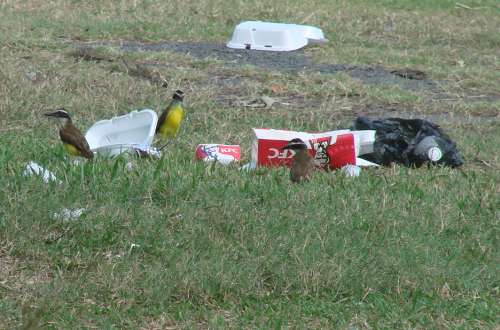
I don’t like the term and I certainly don’t like the idea: there really are no “trash birds” if you’re a real birder. But in Guyana in November, Great Kiskadee, hardly a trash bird by any reckoning here in the US, nearly attained that status: not by virtue of its abundance, but by virtue of its less than virtuous behavior in the botanical gardens in Georgetown.

At first I thought, or at least hoped, that they were in search of insects attracted to the garbage, but no, they were happily cleaning out the styrofoam containers and greasy wrappers themselves.

(Notandum: Guyanans are extremely civilized people, and make conscientious use of public trash receptacles, which are then rifled overnight by feral dogs, to the obvious delight of the kiskadees.)

Share