Guyana: Puffbirds

Take a fistful of fluff, add a wicked bill, endless patience, and an insatiable hunger for fat insects, and you’ve got a puffbird. Puffbirds, though in the same order as woodpeckers, are perhaps more similar to kingfishers in their big-headed and neckless appearance, but they tend to be quieter and more retiring than either most woodpeckers or most kingfishers, just sitting in the shade, waiting for a juicy morsel to blunder by.

Guyana has a wonderful diversity of bucconids, and we had good experiences with most of them, from the flashy Black Nunbird, which we saw several times, to the subtly and intricately patterned Spotted Puffbird, encountered only in the damp woods at Surama.
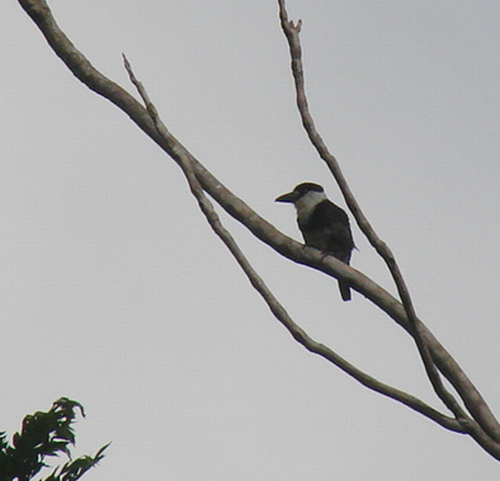
This is a Guianan Puffbird, distinguished from the White-necked Puffbird sensu novo strictoque by the restricted white on the forehead, just visible in this distant shot, and the somewhat smaller (!) bill than the great honking honker of White-necked.

My favorite among the bucconids was the species we ran across most often; we could count on multiple sightings every day, usually of pairs perched and feeding together.
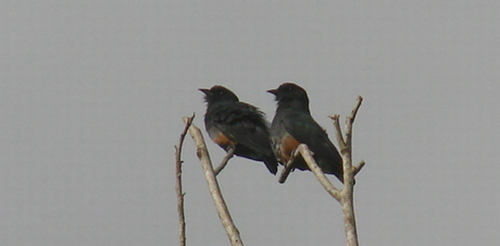
Swallow-winged Puffbirds were much more acrobatic and much more active than the other puffbirds we saw. They perch high in dead twigs, on the alert for passing insects, which they dart up to chase like pudgy swallows. In flight, they are unmistakable and odd, with rather short triangular wings and essentially no tail, reminding me of tiny Bateleurs in silhouette. There are many reasons to visit Guyana, but this funny bird is worth the trip all by itself.

Share

Navigating the B-Log Jumble

My apologies for the heaping up of these ‘posts’ about my late-fall travels, but I wanted to share some of the excitement of my birding visits south, even if they are tardy and out of order. For those annoyed by their apparently chaotic sequence, a reminder: just click on the appropriate category on the right to get all the postings for Panama or Sonora or Nebraska or Guyana, or anywhere else I’ve been in a very busy and very birdy 2007.

Share

Guyana: The Unbittern

Not even Guyana, for all its avian riches, lets birders check off everything on their wish lists in a visit of just two weeks. Several of us had harbored great hopes for Sunbittern, that rainbow-winged shade-dweller of the jungle, but by our last day at Karanambu, it looked like we’d missed it for real.

Our last chance was to walk out towards the back savannah through a small patch of forest, where a slender creek wound its way and Sunbitterns had been seen in the past. So we did. No Sunbittern. After desperately scanning the wooded edges of the water, we continued on to open country, where we salved our wounds with other, more cooperative birds.

Our really last chance was the walk back to the lodge. This time, too, scanning the banks of the creek produced nothing. But the muddy path we’d taken was somehow different this time.

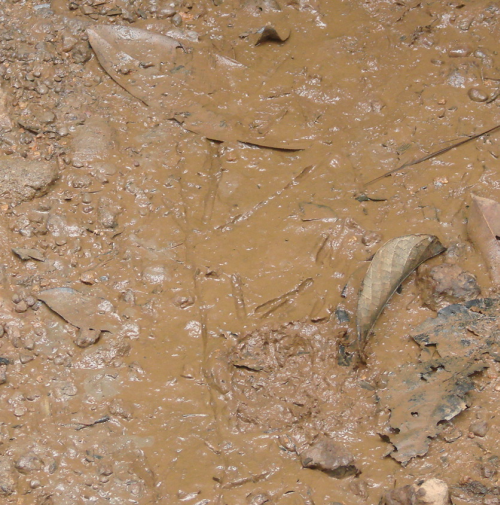
Tracks! The Sunbittern had crossed the path while we were out on the grasslands.

Ah well, one more reason to return to Guyana!

Share

Guyana: Invertebrates

All in all, the insects weren’t bad in Guyana. I did use my bugspray once in a while, and suffered a very few mosquito bites when I didn’t. Because I wasn’t itching (well, except for when I wandered off into chiggerland a couple of times), I had leisure to look at some attractive, or at least bizarre!, insects now and again.

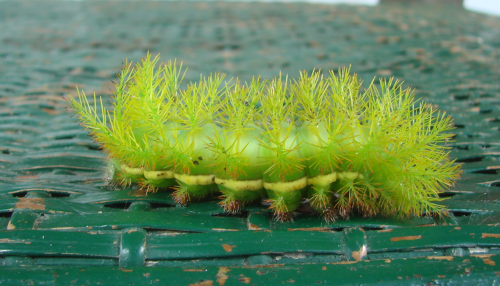
When Judy called me over to look at this odd creature, all I could think of was that poem “A Garden Grows On Her Face,” or in this case, on her back!  I wonder what this turned into; don’t most such highly armed and richly ornamented caterpillars wind up as moths?

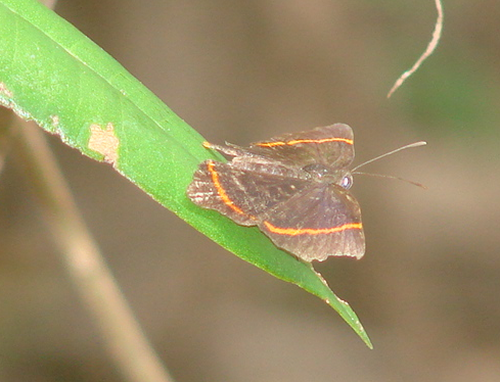
Butterflies were terrifically abundant, and it was great to have Narca along to identify so many of them for us. This, to my surprise, turned out to be a satyr, a group that here in the northern hemisphere comprises almost exclusively species clad in discreet brown and gray.

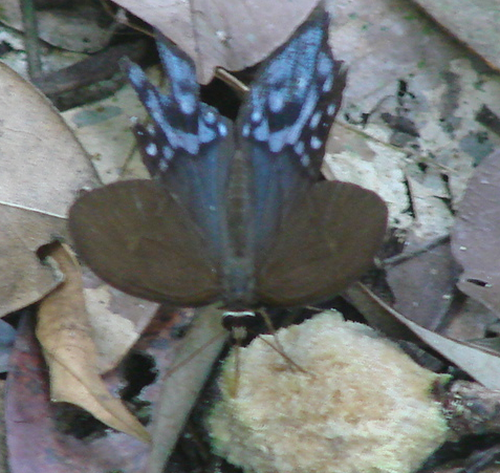
Metalmarks are another group that are modestly hued in temperate climes, but attain great diversity and some wonderful colors in the south.

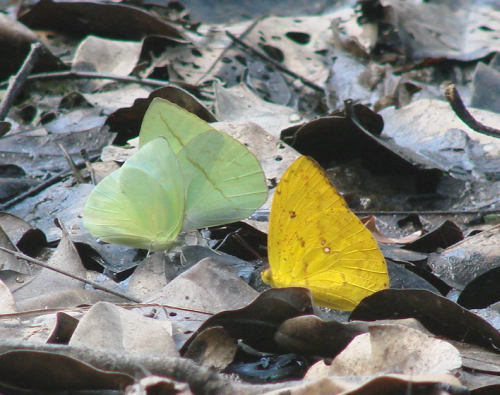
And sulphurs, of course, we have with us always, especially in the swampy woods around Surama.

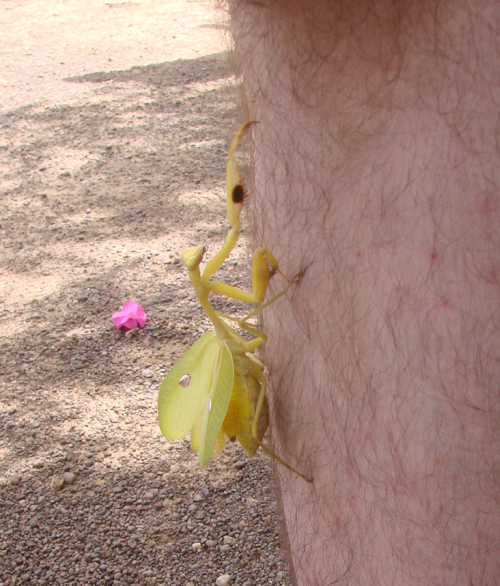
Not all the insects we ran into were as innocuous as these. There were a couple of incidents involving hymenopterans, and one afternoon at Karanambu I felt a scratch on my calf and turned to discover a large, colorful mantid creeping up my leg.

It didn’t bite, but I didn’t let it get much higher, either.

Share

Guyana: Long-legged Waders

Herons and egrets are always a bonus on any trip to the Neotropics; two species in particular were among my favorites on my November visit to Guyana. Both are closely related to familiar North American species, both, though, stunning in their own distinctive ways.

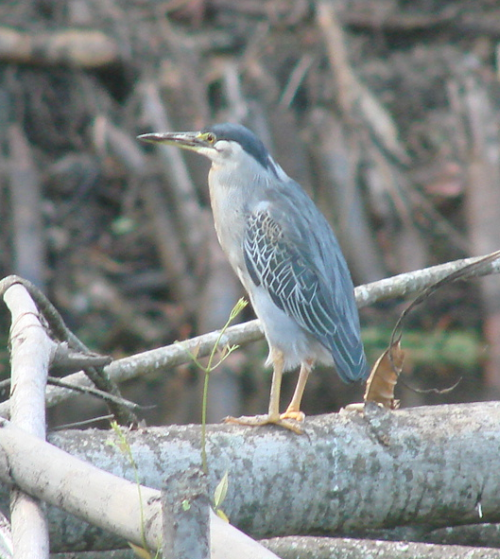
Striated Heron is the southern counterpart of “our” Green Heron, and in fact the two have been considered conspecific at various times. Striated, which occurs in widely in both the Old World and New World tropics, differs from Green Heron in adult plumage by, most notably, the neck color: rich chestnut in Green, lovely dove-gray in Striated. The juveniles are much more similar, as I would discover to my dismay in Panama a few weeks later….

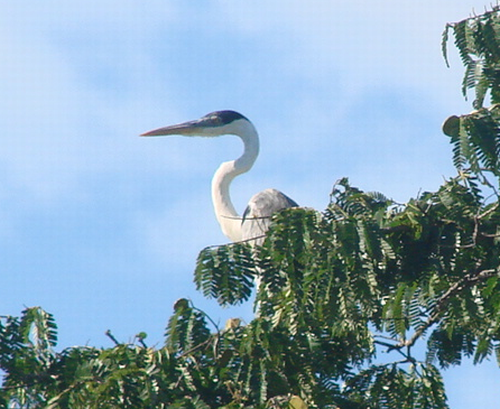
Cocoi Heron, known alternatively (and preferably, to my mind) as “White-necked Heron” is a large and gangly Ardea, a congener of such familiar northern species as Great Blue and Gray Herons. I’d never seen this species until my Guyana trip, and was delighted to find it common along the large rivers we visited. It is superficially similar to Great Blue, as expected, but the neck and bill are longer and the plumage, of course, much whiter, without the rufous highlights of its northern counterpart; notice, too, the lovely head pattern, with the black cap coming down low on the cheek setting off the whitish supraloral.

The photo shows a typical view of the bird half-concealed in the foliage; I don’t think I ever saw the entire bird at once except in flight!

Share