Not That Thayer: Crossley and an American Artist

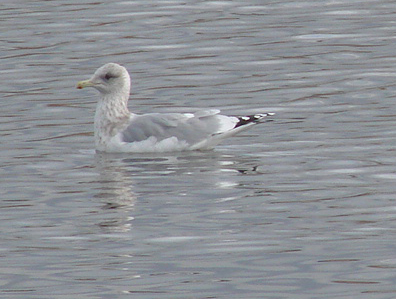
There’s definite movement among the gulls of Vancouver this week. A California Gull was at Kitsilano Pool early this morning, and another adult was on the sewage ponds at Iona with three score Mew Gulls and 19 Thayer’s Gulls as the tide rose mid-day.

That taxon is named for John Eliot Thayer, who bankrolled the 1913 Alaska expedition that collected the first specimens. Maybe we’ll hear a little more more about him next year, the 150th anniversary of his birth–but I’ve been thinking about a different Thayer these past days.

You will have noticed all the attention being devoted to Richard Crossley’s impressive new ID Guide: for a month now, not a day has gone by without a glowing notice at one blog or another, and my own review seemed almost tardy when I “finally”–two days after receiving the book–posted it at the ABA blog.

Birders’ reactions so far (those reactions, that is to say, that have done more than just repeat the breathless jacket text) have concentrated on the guide’s plates, an entirely appropriate focus given the innovative nature of the illustrations in this book that so proudly “doesn’t like text.” And there have been some perceptive characterizations. Spencer, one of the most critically alert birders I know, has pointed out how the vitiation of perspective in the plates highlights the “constructedness” of identification texts, while several ‘bloggers’ have noticed that viewing these plates recalls the contemplation of Victorian dioramas. And not a few reviewers have — rather absurdly — compared Crossley’s photo montages to the work of Louis Agassiz Fuertes.

If all you know of Fuertes are the paintings in Pearson’s venerable Birds of America, then I suppose I can squint just hard enough to see it: there is a certain bustle to those images, particularly among the birds of prey, that anticipates in a very distant way the cheek-to-jowl figures in Crossley’s plates. There is a faint stylistic echo, too, in the prominence with which the larger figures seize the foreground. But the source of each work’s pictorial density is very different: economic in the case of Birds of America, pedagogic in Crossley’s.

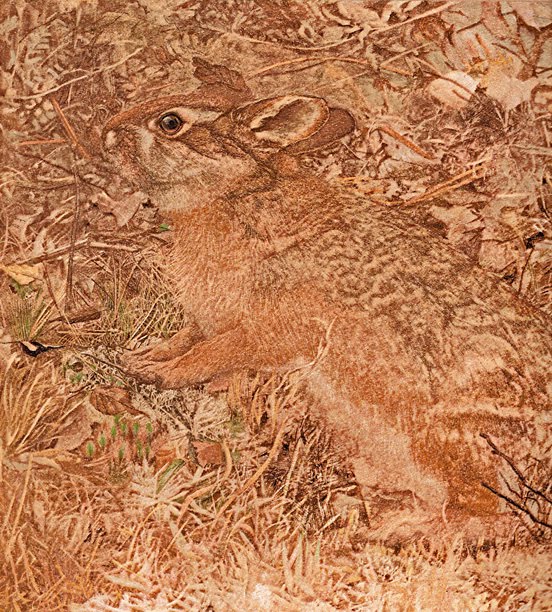
What many of the photographs in Crossley’s ID Guide do remind me of, and sometimes forcefully, is the work and the ideas of Abbott Thayer (no close relation, so far as I know, to John Eliot).
Look at Crossley’s owls, his grouse, his nightjars, his thrushes, and on and on, and you’ll find illustrations–literally–of the Thayerian principles of camouflage and obliteration almost as striking as the artist’s own.
abbott-thayer.blogspot.com

By the time of his death in 1921, Thayer’s theory that all coloration was ultimately and exclusively disruptive was largely dismissed as overstated and inflexible, and his influence on natural history illustration remained negligible at best for nine decades.

Maybe that’s changed now.

Share

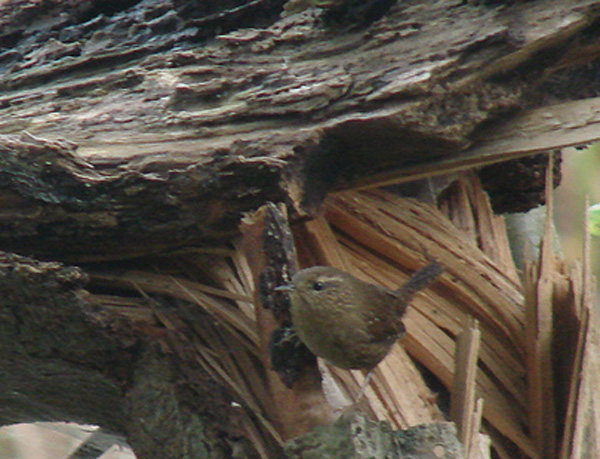
Pacific Wrens

After a couple of weeks of desultory snatches of song, Pacific Wrens have really started to fill the woods with their trills.

Click on the photo and turn up the volume to hear a couple of birds singing at each other in Jericho Park.

Share

Habitat Enhancement

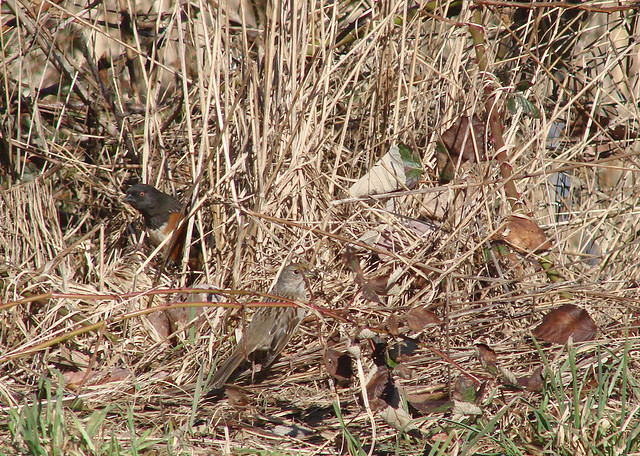
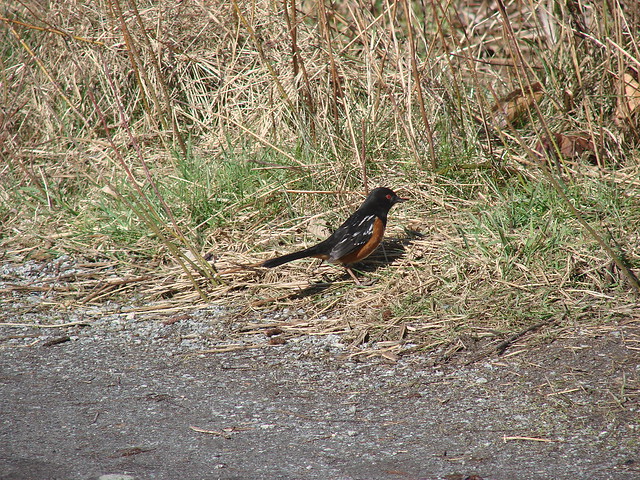
Like most of us, I like my sparrows just a little on the trashy side. Here in urban Vancouver, most of the brushy tangles frequented by birds like Oregon Spotted Towhees and Golden-crowned Sparrows are made up of some pretty nasty non-natives, especially Himalayan blackberry.

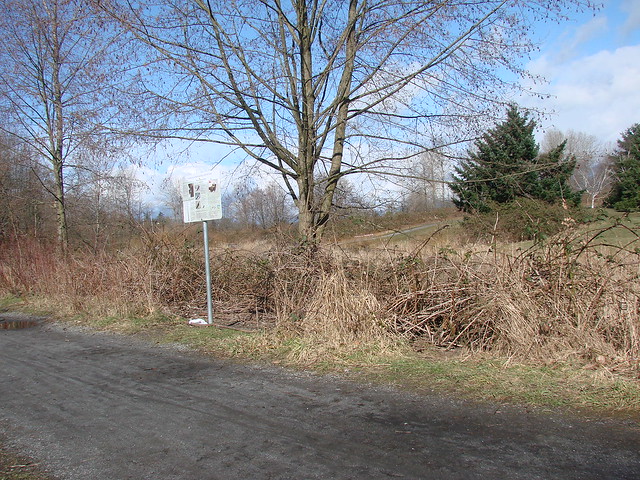
Until this winter, the tangles came right up to this path in Jericho Park, making the bench from which this photo was taken a magical place to watch secretive thicket birds at close range.

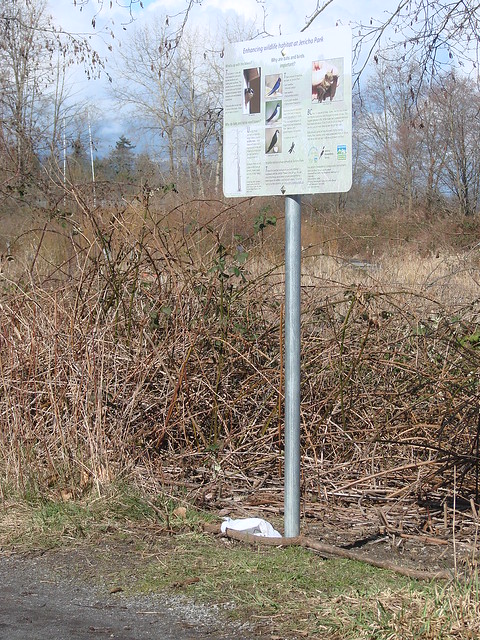
Early this year, the friends of the park got in there and whacked it so that they could  have room for a new sign–touting their “enhancement” of the habitat.

I’m torn. On the one hand, the fewer invasive brambles, the better. On the other, the more cover–whatever its origin, whatever its nature–the better. It doesn’t improve things, either, that bare spots prove so attractive to the scofflaw dog crowd, many of whom seem unable to walk the remaining 30 yards to throw their poop sacks in the garbage can.

The birding at my magic bench was all right this morning, but I couldn’t help wondering how much better it would have been with the habitat–trashy, non-native, invasive habitat–intact.

Share

Twice

Wouldn’t it be nice if there were a secret to seeing birds, a trick that could be passed from generation to binoculared generation?

Fact is, “technique” has a lot less to do with it than persistence. For decades now, I’ve been in the habit of doing everything twice. And though I may not quite double my morning’s list that way, I do see a lot of birds I missed the first time through.

Today, for example, I took a late morning’s stroll through Jericho Park. My first pass turned up several of the birds I’d been hoping to see–Eurasian Wigeon, Hooded Merganser, Sooty Fox Sparrow–but there had to be more. Right?

I think sometimes that the first hour of some birding days is wasted, or at least spent, just getting in the mood. Not to go all new-agey, but there’s a certain state of receptivity a birder has to slip into, a paradoxical combination of passivity and lynx-eyed awareness; sometimes you’re ready the moment you step outside, sometimes it takes you (or at least me) a little while to attain full birder mode.

On my way west through the park this morning, I’d seen a small gathering of House Finches, Red-shafted Flickers, and European Starlings at a puddle, and decided to check it again an hour later on the way back. I must have got into “the zone,” because this time there were 150 fringillids including dozens of American Goldfinches and a few Pine Siskins, three Downy Woodpeckers and a very fancy Red-breasted Sapsucker, and miscellaneous hangers-on from Oregon Junco to Varied Thrush.

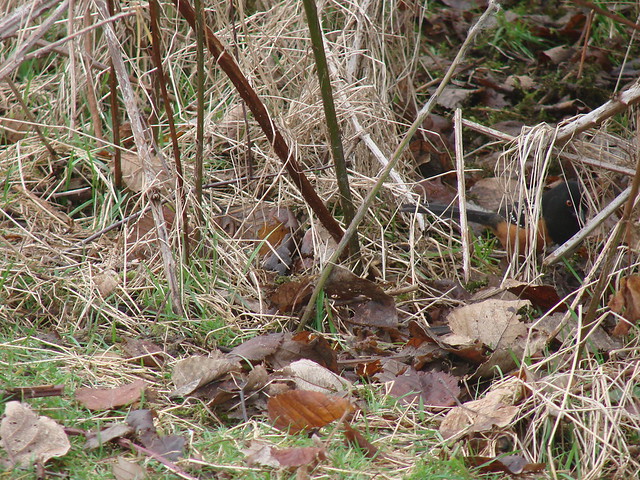
It was like that the rest of the way back to the parking lot. What had looked  like this when I started out

was now this:

And bare branches

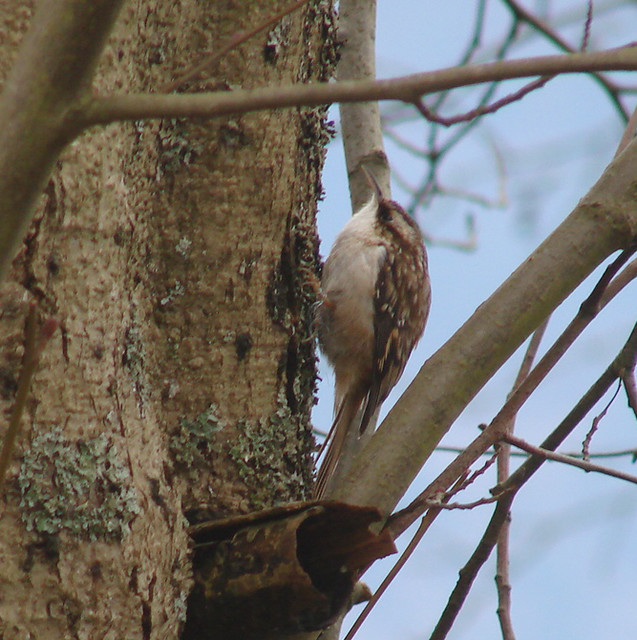
were suddenly populated with Ruby-crowned Kinglets, a Hutton’s Vireo, Pacific Wrens, and this fine Brown Creeper.

If it hadn’t been cold and windy, a third time around might have paid off!

Share

It Takes Two to Pinwheel

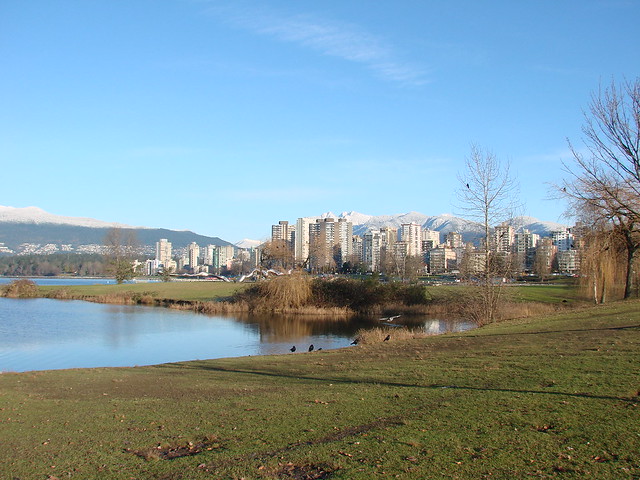
After these past several field trips in the rain, my Nature Vancouver group and I almost felt like we deserved today: look at that sky! It wasn’t warm, barely above freezing most of the day, but irresistibly beautiful all the same at Vanier Park and on the shores of English Bay.

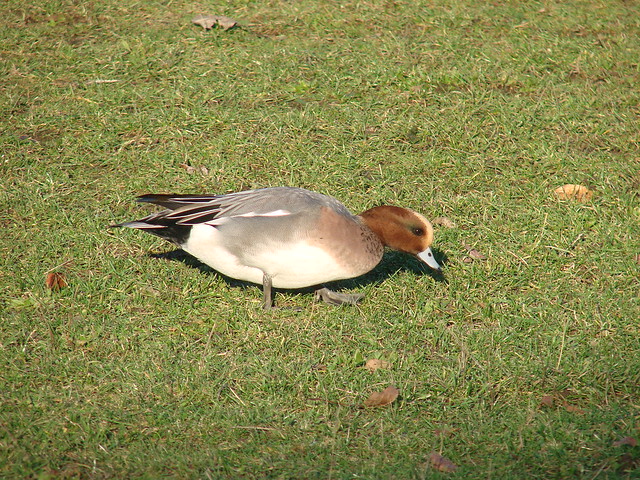
As you might expect in Vancouver in December, our morning’s list was heavily weighted towards waterfowl. Of our 36 species, fully fifteen and a half were anatids, among them some local specialties. The little pond at Vanier Park produced the expected Eurasian Wigeon; there was general agreement that this male rather outshines the females we’d been watching on the last couple of trips to Jericho!

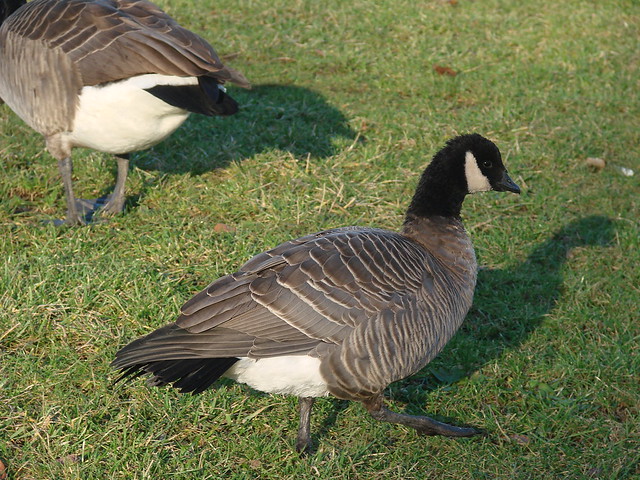
The Canada Goose flock, a bit standoffish of late, finally stood still to let us scan it; the results included two other species of goose, a single juvenile Snow Goose and this lovely minima Cackling Goose.

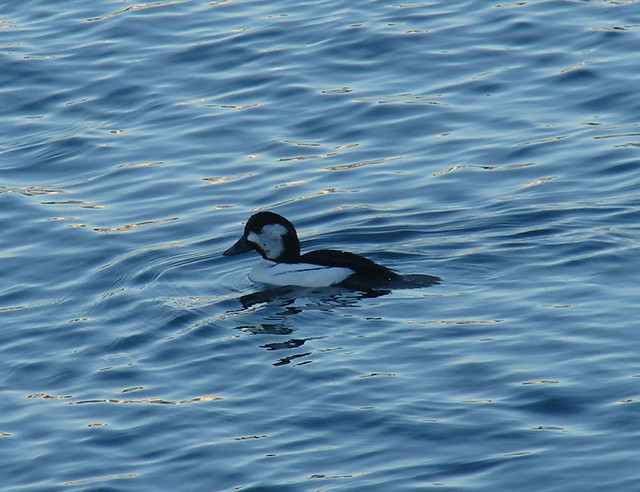
And the rarest bird of the day was the reliable little Bucephala hybrid, bobbing and diving more or less on his own in the vicinity of the Surf and White-winged Scoters.

But the interesting sighitng of the morning was provided by a common anatid, Northern Shoveler. Peter discovered two on the pond, swimming circles around each other in the classic shoveler “pinwheel.”

Click for a dizzying video.

Both birds were brown, but one–the right-hand bird in the photo above–showed a solid black bill and a yellow eye, sexing it a male; closer inspection revealed a decided ruddy tone to many feathers of the flank.

The molts of Northern Shoveler remain something of a mystery, but this is apparently a first-cycle male at the very dullest extreme, easily overlooked in a first scan, but a real eye-opener if you pause to look close.

Share